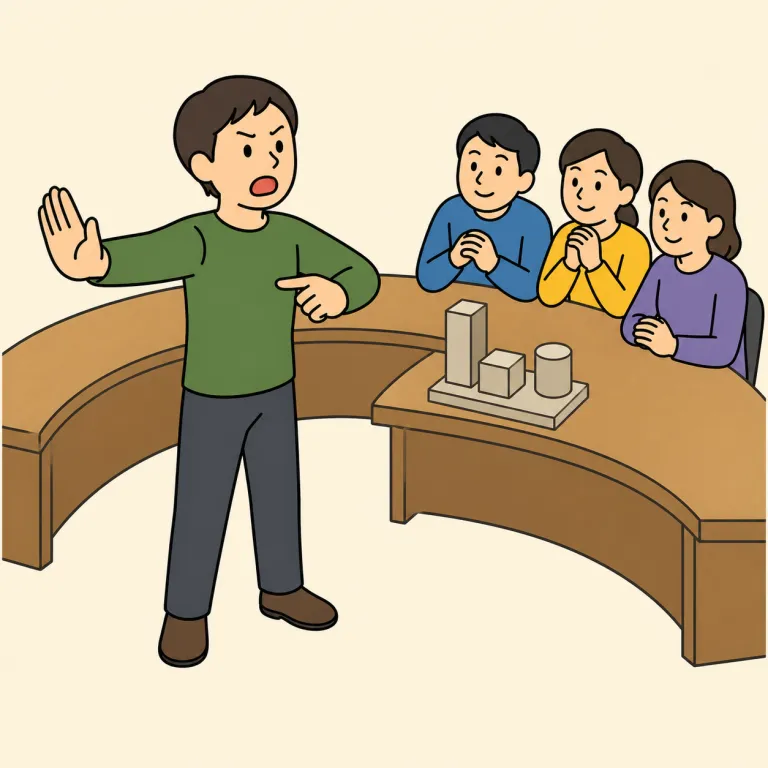
反対者
解説 Definition
反対者とは、ある意見や計画、決定に反対の立場を取る人のことです。異議を唱え、反対の意見を述べる人を指します。
An objector is a person who expresses opposition or says that they disagree with something. The word is often used in formal situations such as meetings, legal matters, or public debates. It focuses on the person who raises the objection.
覚え方のコツ Memory Tip
objector は、まず動詞 object「反対する」を知っておくと覚えやすい語です。そこに actor, creator, visitor と同じ -or「〜する人」が付いて「反対する人」。会議や裁判、計画への賛否で "I object." と声を上げる人物像をセットで覚えると残ります。objection は「反対・異議」、objector は「その異議を出す人」。opponent が広く「相手・反対者」を指すのに対し、objector は何かに異議を唱える場面が濃い語。名詞 object「物」と発音・意味が別なので混同注意。
Build it from the verb `object`, meaning to say no or raise an objection. Then add `-or`, the common ending for a person who does something, as in `actor` or `creator`. So an `objector` is the person who speaks up against something. Keep it next to `objection`, and do not confuse it with the noun `object`, meaning a thing.
例文
The proposal faced strong objections from several objectors in the meeting.
その提案は会議で数人の反対者から強い反対を受けました。
As a vocal objector, she expressed her concerns about the new policy.
声高な反対者として、彼女は新しい政策についての懸念を表明しました。
One of the main objectors to the plan was an environmental scientist.
その計画への主な反対者の一人は環境科学者でした。
objector の類義語・関連語
対義語
紛らわしい語
objector の語源・成り立ち Etymology
objector は object+-or「…する人」。object はラテン語 obicere / objicere「前に投げる・ぶつける」(ob-「〜に向かって」+jacere「投げる」)にさかのぼり、objection や subject と同じ語根を持つので、「異議を投げかける人」から「反対者」になりました。
Objector comes from object plus the agent ending -or, meaning "a person who does something." Object goes back to Latin obicere or objicere, "to throw against," from ob- "toward, against" and jacere "to throw." The sense developed from putting something forward against another thing to raising an objection, so an objector is literally someone who "throws against."
同じレベルの語彙をもっと
外部辞書で調べる
この英単語をクイズで覚えよう