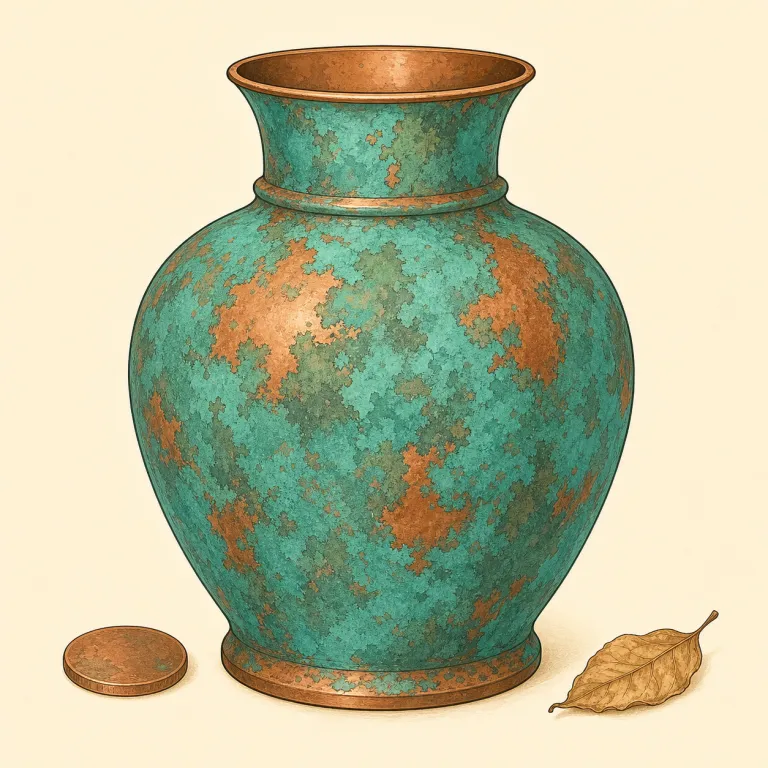
比喩的な趣、風格;うわべ、体裁
noun 名詞長い年月を経た人や物に備わった、落ち着いた雰囲気や風格を比喩的に指す。a patina of respectability のように、表面を覆う印象や体裁を表すこともある。
長年の使用や風化により金属や物質の表面に形成される緑色または茶色の皮膜のこと。歴史的な価値と美しさを象徴します。
Patina is a thin surface layer that forms on metal, wood, leather, or similar materials as they age. It often changes the color or texture and can be seen as a sign of age, use, or beauty. In art and design, patina is sometimes valued because it gives an old or authentic appearance.
patina は「古い金属の表面に出る味わいある膜」とセットで覚えると残りやすいです。新品の shine とは逆で、年月を経て落ち着いた見た目になる感じ。bronze patina, green patina, develop a patina の形でよく出ます。単なる rust(さび)よりも、価値や風格を伴う語で、antique furniture や old buildings の文脈にもなじみます。比喩でも a patina of age / respectability のように「表面についた古さ・もっともらしさ」を表せるのがポイントです。
Link `patina` with old metal that gains character over time. It is the opposite of a brand-new shine, so think of age adding a special surface. Phrases like `green patina` or `develop a patina` make it easier to remember.
The patina on the bronze statue gave it a distinguished appearance.
青銅像は古色を帯び、風格のある姿を見せていました。
The coins developed a beautiful patina over centuries.
それらのコインは数世紀にわたって美しい古色を帯びました。
Collectors often value the patina on antique objects.
コレクターはアンティーク品の古色を高く評価することが多いです。
文脈によって、次の意味でも使われます。
長い年月を経た人や物に備わった、落ち着いた雰囲気や風格を比喩的に指す。a patina of respectability のように、表面を覆う印象や体裁を表すこともある。
patina はイタリア語 patina を経て、ラテン語 patina「浅い皿・薄い板」に由来します。表面を薄く覆う膜という感覚から、金属に生じる緑青や古びた味わいを指す語になりました。関連語は paten と patera です。
Patina came into English through Italian patina, from Latin patina, meaning a shallow dish or thin plate. The idea seems to have shifted from a thin flat object to a thin layer covering a surface. From there, it came to refer to the film that forms on metal and later to the aged surface look in general.
この英単語をクイズで覚えよう