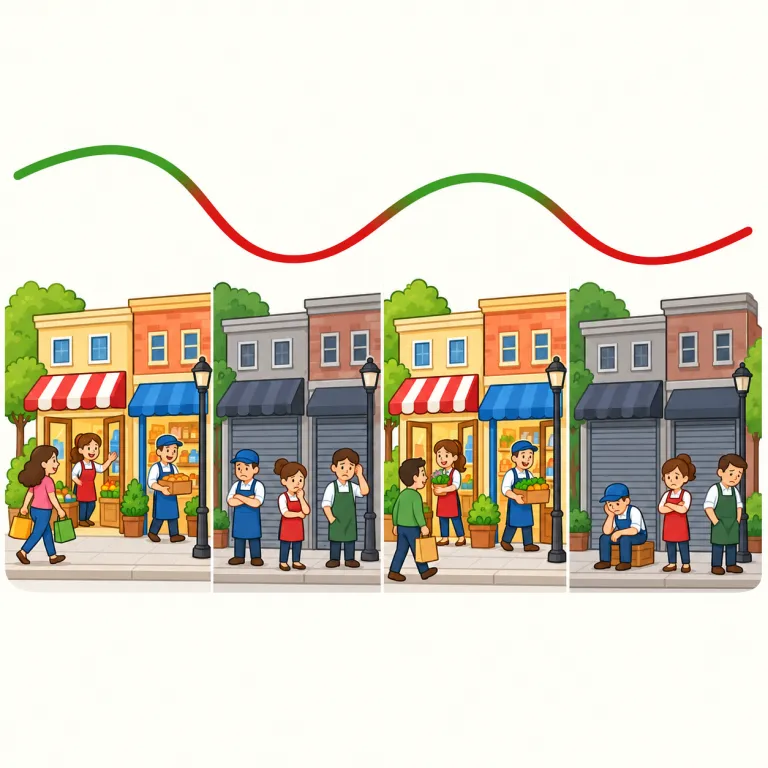
不況
解説 Definition
recessions は recession「不況・景気後退」の複数形です。雇用・生産・消費などが広く弱まる経済の後退期を複数指します。
Recessions are separate periods of broad economic decline during which activity, production, employment, investment, or consumer spending weakens significantly across an economy.
使い方 Usage
覚え方のコツ Memory Tip
recede「後退する」と結び付け、経済活動が後ろに下がる様子を思い浮かべます。recessions は、そのような時期が複数あることを示す形です。
Link recession with recede, meaning move backward, and picture economic activity retreating. Recessions adds the plural -s to refer to more than one such period.
例文
The country has faced two recessions in the past decade.
その国は過去10年で2度の不況を経験しました。
Small businesses often struggle during long recessions.
小規模企業は長い不況の間、苦境に立たされることがよくあります。
Economists compared recent recessions to understand how quickly jobs returned.
経済学者たちは雇用がどれほど早く回復したかを理解するため、近年の不況を比較しました。
recessions の類義語・関連語
recessions の語源・成り立ち Etymology
recessions は recession の複数形で、語源はフランス語 récession を経たラテン語 recessio「後退」です。re-「後ろへ」+ cedere「進む・行く」で、本来は「引っ込むこと」。景気が前進せず後ずさる感覚から「不況」の意味になり、関連語に recede, cede があります。
Recessions is the regular plural of recession. Recession entered English through French and comes from Latin recessio, “a going back or withdrawal,” formed from recedere, “to go back.” That verb combines re-, here conveying backward movement, with cedere, “to go.” The economic sense developed from the image of activity retreating or declining. Recede and cede share the same Latin root.
同じレベルの語彙をもっと
外部辞書で調べる
この英単語をクイズで覚えよう