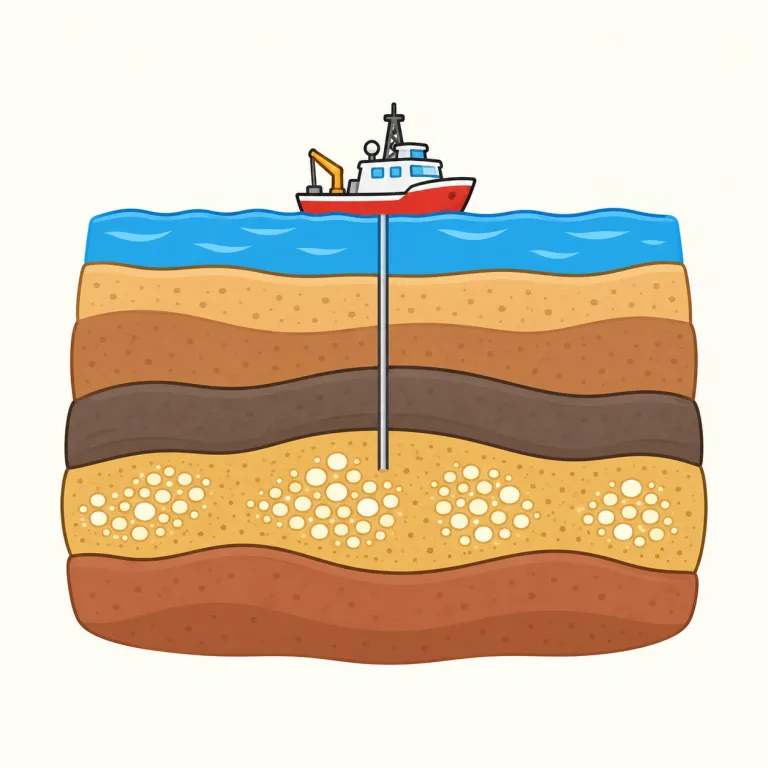
埋蔵量
解説 Definition
reserves は reserve(埋蔵量、備蓄)の複数形です。石油や天然ガスなど、将来使うために残されている資源の量を指すことが多い語です。
Reserves are supplies or quantities of resources kept or available for future use. In discussions of energy and mining, the word often refers to known amounts of oil, natural gas, coal, or minerals that can potentially be recovered.
覚え方のコツ Memory Tip
reservesは名詞reserve「備蓄・埋蔵量」の複数形で、語末に-sを付けます。reserveの末尾は有声音/v/なので-sは/z/と発音され、/rɪˈzɜːrvz/となります。oil reserves、gas reserves、coal reservesのように資源名の後に置き、「将来利用できる量」を表す組み合わせで覚えましょう。
Start with the singular noun reserve and add -s to refer to multiple supplies or quantities. Since reserve ends in the voiced sound /v/, the plural ending is pronounced /z/, producing /rɪˈzɜːrvz/. Associate the word with common combinations such as oil reserves, gas reserves, and coal reserves. These are resources that remain available for future extraction or use, not resources already consumed. The core image is something held back and preserved. Do not confuse this plural noun with reserves as a verb in “she reserves a room.”
例文
The country has large oil reserves.
その国には大きな石油埋蔵量があります。
Gas reserves were found under the sea.
海底で天然ガスの埋蔵量が見つかりました。
The report shows the coal reserves in the area.
その報告書はその地域の石炭埋蔵量を示しています。
reserves の類義語・関連語
reserves の語源・成り立ち Etymology
reserves は reserve の複数形で、ラテン語 reservare に由来する。これは re-「後ろに」+ servare「保つ・守る」から成り、フランス語 réserver を経て英語に入った。同根語に preserve、conserve があり、「今は使わず取っておく」感覚から資源の「埋蔵量」になる。
Reserves is the plural of reserve. Reserve came through French réserver from Latin reservare, formed from re-, with the sense of keeping back, and servare, “to keep, preserve, or guard.” The idea of holding something back for later use produced the noun senses “ запас,” “supply,” and “resource deposit.” Preserve and conserve also contain the Latin element servare and share the broad idea of keeping something safe or available.
同じレベルの語彙をもっと
外部辞書で調べる
この英単語をクイズで覚えよう