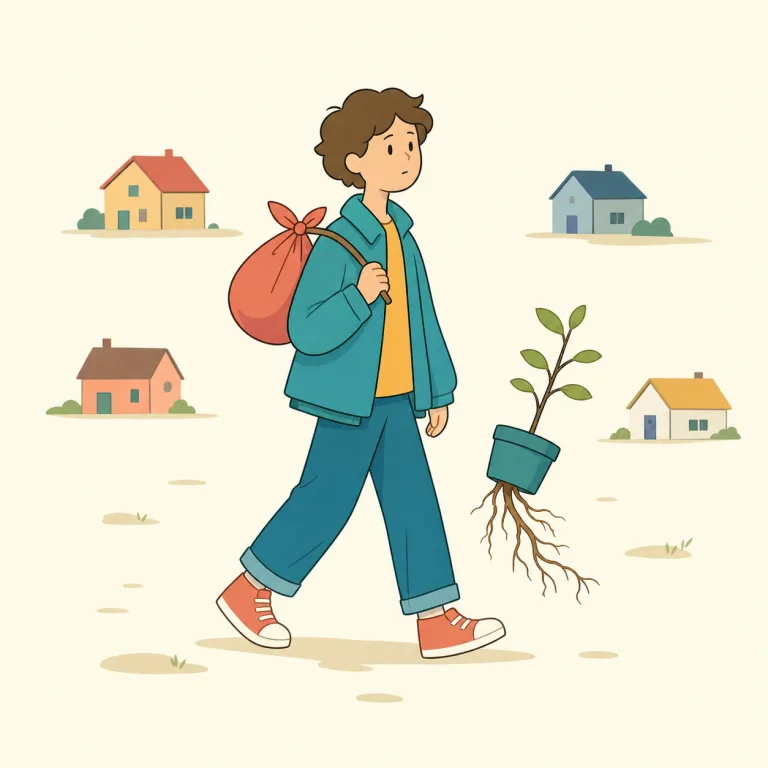
根のない、根を失った
adjective 形容詞植物などが根を持たない、または根を失った状態を表します。rootless cutting のように、まだ発根していない挿し木などについて使われ、人の帰属感や思想的基盤を述べる比喩用法とは区別されます。
ある土地や共同体に根を下ろさず、住む場所や所属先が安定していない様子を表す。人については放浪的で、家庭・地域・社会との結びつきや帰属感が薄いことを含む。比喩的には、考えや活動に確かな基盤がないことにも使われる。
Rootless describes someone who does not feel settled or connected to one place, group, or tradition. It is often used for people who move a lot or feel they do not belong anywhere. The word can describe both a physical and emotional lack of stability.
root を知っていれば覚えやすい語です。植物が root で地面にしっかり固定されるイメージから、rootless は「根がない」→「土地・共同体・仕事などに腰を落ち着ける土台がない」と広がります。rooted は「しっかり根づいた」、uproot は「根こそぎ抜く」なので対比で整理すると定着します。人に使えば放浪的・帰属感が薄い感じ、考えに使えば grounding のない不安定さを含む語です。
Break it into `root` + `-less`. Roots are not only for plants; they also suggest home, belonging, and a stable base in life. So `rootless` gives the image of a person with no deep connection anywhere, the opposite of `settled` or `grounded`.
He led a rootless existence, never staying in one place long.
彼は定住先のない暮らしを送り、一つの場所に長くとどまることはなかった。
The rootless youth struggled to find belonging in society.
そのよりどころのない若者は、社会の中で居場所を見つけるのに苦労した。
Modern economic shifts have created more rootless populations.
現代の経済変化は、安定した住まいや結びつきを持てない人々を増やしている。
文脈によって、次の意味でも使われます。
植物などが根を持たない、または根を失った状態を表します。rootless cutting のように、まだ発根していない挿し木などについて使われ、人の帰属感や思想的基盤を述べる比喩用法とは区別されます。
rootless は root + -less「ない」から成り、root は古英語・古ノルド語系の「根」に由来する。植物が根で土に定着するように、人も拠り所を持つという発想から、「根無しの・定着先のない」意味が生まれた。関連語は uproot, rooted。
Rootless is built from root and the suffix -less, meaning "without." Root comes from Old English and also has links to Old Norse words for a plant's root. Because roots fix a plant in the ground, the word later came to suggest a person or thing with no firm place or connection. Related words include rooted and uproot.
この英単語をクイズで覚えよう