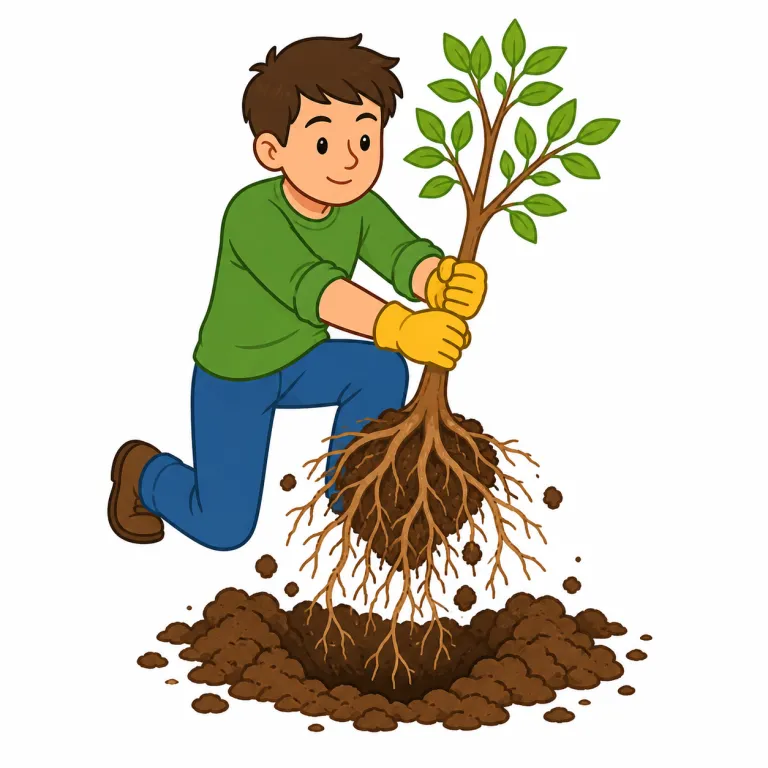
根絶する、一掃する
verb 動詞社会に深く根づいた制度・慣習・悪弊などを根本から取り除くことを表す。uproot corruptionやuproot prejudiceのように使い、単に一部を改善するのではなく原因や基盤ごと一掃する含みがある。
根から引き抜くことです。また、人を住んでいた場所から強制的に移住させることを意味します。
To uproot means to pull a plant completely out of the ground, including its roots. It can also mean to force people to leave their home or to remove something firmly established, such as a custom or problem.
root「根」が分かれば覚えやすい語です。up + root で、植物を根ごと上に引き抜く場面をまず思い浮かべると、「表面だけでなく土台から取り去る」感覚が残ります。そこから比喩で、old customs を一掃する、people を故郷から追い立てる、のように制度・習慣・人を元いた場所や基盤から根こそぎ動かす意味へ広がります。remove より徹底的で、ただ消すのでなく“根を断つ”強さがある語です。root out は隠れたものを探し出して排除する語で、uproot とは少し違います。
See the word as `up + root`. First picture pulling a plant up by the roots, not just cutting the top. That image helps you remember the stronger idea of removing something completely from its base, whether it is a plant, a custom, or even people from their home.
The government decided to uproot indigenous communities.
政府は先住民の共同体を住み慣れた土地から追い立てることを決定した。
We had to uproot our family to move for my new job.
新しい仕事のために、家族で生活の基盤を移さなければなりませんでした。
Gardeners carefully uproot old plants before replanting.
庭師は植え直す前に古い植物を慎重に根から引き抜く。
文脈によって、次の意味でも使われます。
社会に深く根づいた制度・慣習・悪弊などを根本から取り除くことを表す。uproot corruptionやuproot prejudiceのように使い、単に一部を改善するのではなく原因や基盤ごと一掃する含みがある。
uproot は up「上へ」と root「根」から成る語で、root は古ノルド語 rot にさかのぼります。文字どおり「根を上へ引き抜く」ことから、植物だけでなく制度や習慣を根こそぎ除く意味にも広がりました。関連語に rootless、rooted があります。
Uproot is made from up and root. Root goes back through Germanic languages to Old Norse rot, meaning "root." The literal idea was pulling a plant up by its roots, and later the word widened to mean removing something completely, such as a custom or system. Related English words include rooted and rootless.
この英単語をクイズで覚えよう