たわごと、くだらない話
noun 名詞発言や考えを、ばかげていて真実ではないものとして退ける表現です。主に英国英語のくだけた、やや古風な用法で、That's rotやa load of rotなどの形で使われます。
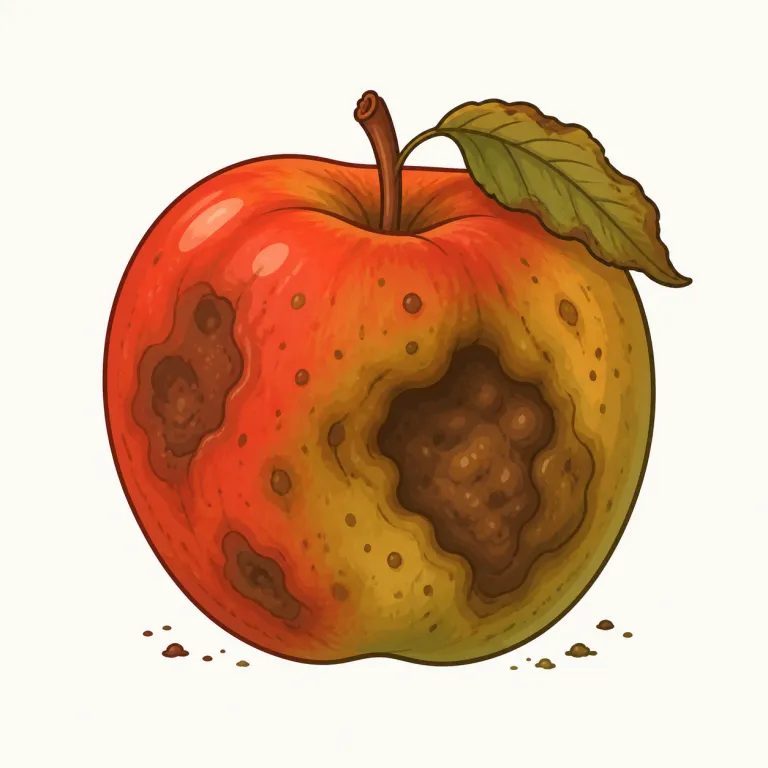
rot は英検準1級・TOEIC 990・TOEFL 100・IELTS 7.5レベルの英単語で、「腐る」という意味があります。発音記号は /rɑt/ です。
有機物が腐敗して悪くなる過程のことです。バクテリアやカビの作用により、食べ物や木材などが分解されていきます。
To rot means to decay slowly and become soft, damaged, or spoiled over time. It is often used for food, wood, plants, or other natural material. The process usually happens because of age, moisture, or bacteria.
"rotten(腐った)"を知っていれば、rot はその元の動詞で「腐る」とつなげやすいです。特に food, fruit, wood, teeth など、有機物が中から悪くなっていく場面でよく出ます。より一般的で説明的な decay より、rot は湿って崩れ、臭いも出るような生々しい腐敗の感じ。metal は rust、制度や心が放置でだめになる比喩でも rot と言える、という使い分けで覚えると残ります。
If you know rotten, rot is the verb behind it. That makes an easy pair: food rots, then it becomes rotten. It is a vivid word for things like fruit, wood, or teeth going bad from the inside, and it feels stronger and more physical than decay.
The fruit began to rot after a few days.
果物は数日後に腐り始めました。
The wooden beam started to rot because of moisture.
木製の梁は湿気で腐り始めました。
If you don't refrigerate the meat, it will rot.
肉を冷蔵しなければ、腐ります。
この語をはじめて出題された 65人 のうち 47人 が正解しました(72%)。
えいたんごクイズの回答から集計した独自データです。1人につき最初に出題されたときの1回だけを数えており、復習や2回目以降の回答、「わからない」と時間切れは含みません。 集計時点は 2026年9月19日 です。
文脈によって、次の意味でも使われます。
発言や考えを、ばかげていて真実ではないものとして退ける表現です。主に英国英語のくだけた、やや古風な用法で、That's rotやa load of rotなどの形で使われます。
rot は古英語 rotian「腐る」に由来し、さらにゲルマン祖語系の「崩れながらだめになる」感覚を受け継ぐ語です。物が内側から傷んで形を失うイメージが、そのまま食物や木が「腐る」という意味になりました。関連語は rotten, rotter です。
Rot comes from Old English rotian, meaning "to decay" or "go bad." It goes back to an older Germanic root with the sense of breaking down or spoiling from within. The modern meaning kept that image of something losing its form as it decays. Related words include rotten.
この英単語をクイズで覚えよう