縄で縛る、投げ縄で捕らえる
verb 動詞人や物をロープで縛ったり、家畜などを投げ縄で捕らえたりすることを表します。rope the boxes togetherやrope a calfのように目的語を取り、単にロープを所有・使用することとは異なります。
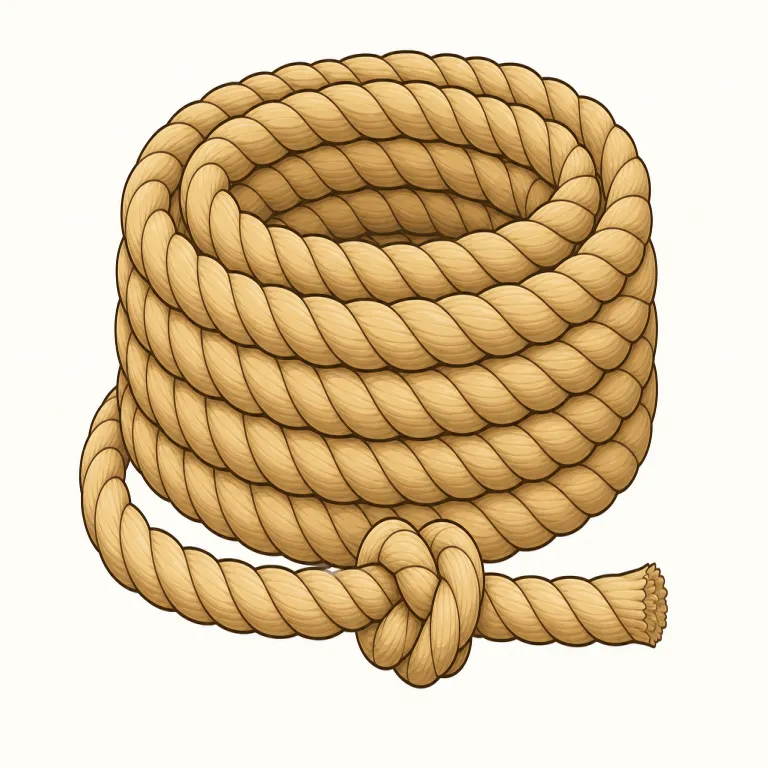
物を結んだり吊したりするために使う、太く丈夫なひもの事です。様々な用途に使われます。
A rope is a thick, strong cord made by twisting fibers or other material together. It is used for tying, pulling, climbing, or holding things in place. Rope is common in outdoor work, sports, and daily practical use.
rope はまず「ひも類の太さの段階」で覚えると残りやすいです。thread は糸、string は細めのひも、cord はやや丈夫、rope になると人や物を引く・縛る・吊るせるほど太く強い感じです。a rope ladder, a climbing rope, tie it with a rope のように「強度が必要な場面」と結びつけると定着します。似た形の hope などとは意味が全く違うので、必ず「太くて実用的な縄」の映像で覚えるのがコツです。
Remember it by size and strength: `thread` is very thin, `string` is thin, `cord` is stronger, and `rope` is thick and strong. A `rope` is the one you imagine for pulling, tying, or climbing. Phrases like `climbing rope` and `tie it with a rope` help fix that strong image.
This rope is very long.
このロープはとても長いです。
I pull the rope.
私はロープを引きます。
The rope is on the floor.
ロープは床の上にあります。
文脈によって、次の意味でも使われます。
人や物をロープで縛ったり、家畜などを投げ縄で捕らえたりすることを表します。rope the boxes togetherやrope a calfのように目的語を取り、単にロープを所有・使用することとは異なります。
古英語 rāp(縄)から。ゲルマン祖語 *raipaz に遡り、古ノルド語 reip とも同根。ドイツ語 Reif(輪)とも関連がある。繊維を撚り合わせて作る道具という素朴な原義がそのまま現代まで残った基本語彙である。
Rope comes from Old English rap, meaning "rope" or "cord." It goes back to Proto-Germanic *raipaz and is related to Old Norse reip and other Germanic words. The basic idea of twisted fibers tied together stayed very stable, so the word has changed little in meaning over time.
この英単語をクイズで覚えよう