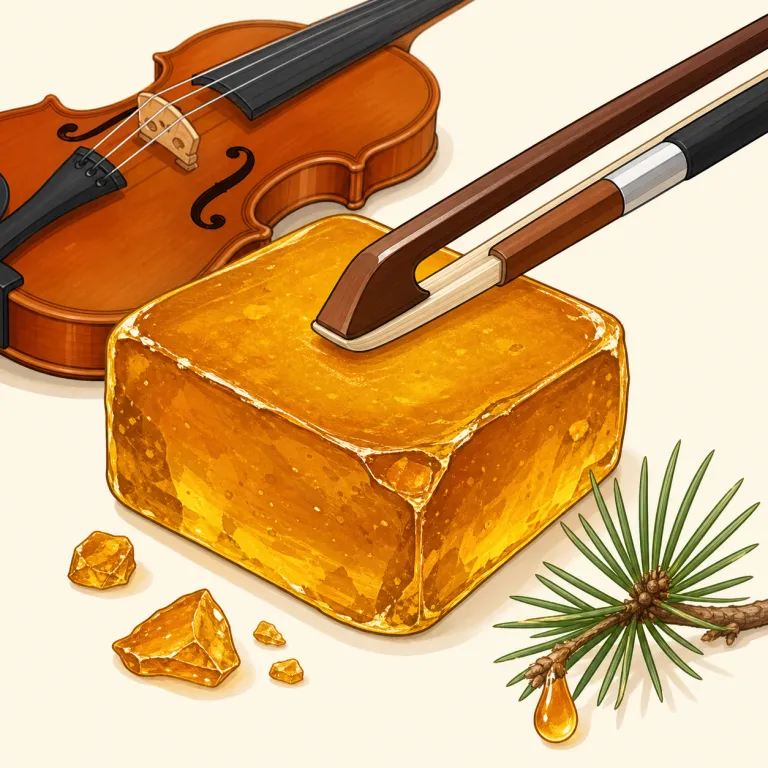
松脂
解説 Definition
松などの樹木から得られる固い樹脂で、特にバイオリンなどの弦楽器で、弓に塗って摩擦を高め、弦を鳴らしやすくするために使われます。楽器用語としてよく見られますが、工業製品の材料や加工に使う樹脂を指す場合にも用いられる語です。
Rosin is a hard, sticky substance made from the resin of pine and other similar trees. It is used to create more friction, especially on violin bows, dance shoes, or athletes' hands. The word is most common in music, sports, and some technical work.
覚え方のコツ Memory Tip
rosin は resin に綴りも音も近いので、「樹脂 resin の中でも、特に松由来で、弦楽器の弓に使うもの」とまとめて覚えると定着しやすいです。『松脂』という和訳だけで止めず、put rosin on the bow, violin rosin という使用場面ごと覚えるのが有効。役割は弓と弦の摩擦を増やして音を出しやすくすること。resin は広い上位語、rosin はその中でも用途がかなり具体的な語、という差を意識すると混同しにくくなります。
Think of `rosin` as very close to `resin`. Use that link: rosin is a special kind of resin, especially the kind you hear about with violins. Remember common phrases like `violin rosin` or `put rosin on the bow`.
例文
Violinists apply rosin to their bow to improve the sound.
バイオリニストは音の出をよくするために弓に松脂を塗る。
The rosin dust accumulated on the musician's clothes.
松脂の粉が演奏者の服に積もっていた。
Good quality rosin is essential for professional musicians.
質の良い松脂はプロの音楽家にとって不可欠だ。
rosin の類義語・関連語
rosin の語源・成り立ち Etymology
rosinは古フランス語raisine・rouzineを経て、ラテン語resina、さらにギリシャ語rhētinē「松やに」にさかのぼります。もともと樹脂そのものを指す語なので、松脂を精製したロジンという意味になるのが自然です。関連語はresin、resinous。
Rosin comes through Old French from Latin resina, and ultimately from Greek rhetine, all referring to tree resin. It originally named the sticky substance from pines and similar trees. In English, it narrowed to mean the processed resin made from that material, and it is closely related to resin and resinous.
同じレベルの語彙をもっと
外部辞書で調べる
この英単語をクイズで覚えよう