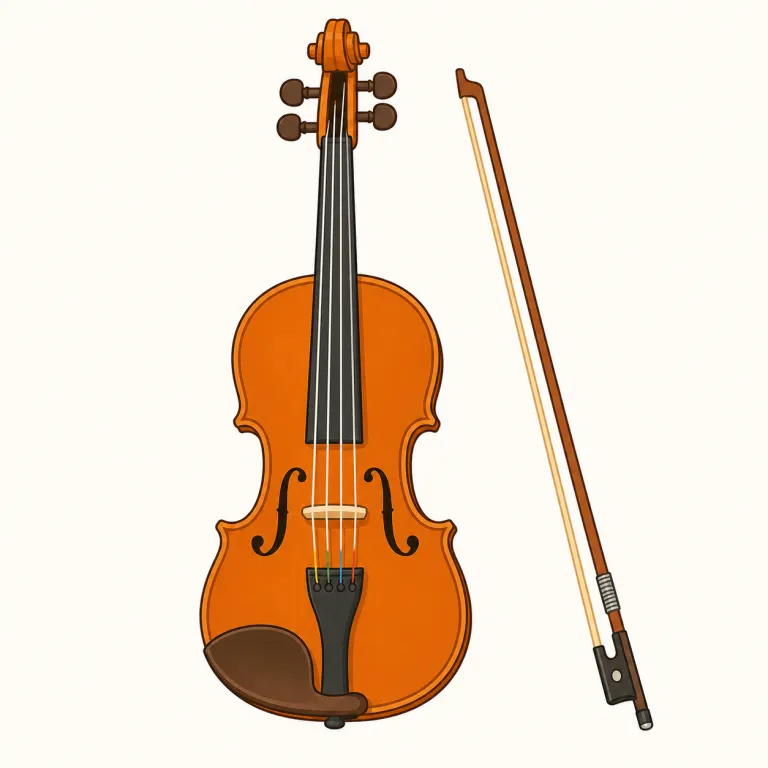
ヴァイオリン
解説 Definition
ヴァイオリンという弦楽器の意味です。日本語の「バイオリン」と同じ楽器を指し、英語では violin とつづります。
A violin is a small, high-pitched wooden string instrument with four strings, normally held between the shoulder and chin and played with a bow. It is widely used in classical music and many other musical traditions.
覚え方のコツ Memory Tip
violin は viola「ヴィオラ」にイタリア語の縮小辞 -ino が付いた「小さなヴィオラ」に由来する。肩とあごの間に構え、弓で弦をこする高音域の楽器を思い浮かべる。英語では play the violin のように、楽器の演奏には通例 the を伴う。
Link violin with viola: the historical form behind violin meant a smaller viola-like instrument. Picture the smaller, higher-pitched member of the bowed-string family resting between a player’s chin and shoulder. Its four strings are usually sounded with a bow, although they can also be plucked. For usage, remember the common pattern play the violin, as in “She plays the violin.” This distinguishes the instrument from its player, a violinist, and from a viola, which is slightly larger and generally has a lower range.
例文
She plays the violin.
彼女はヴァイオリンを弾きます。
My brother has a small violin.
私の兄は小さなヴァイオリンを持っています。
The violin sounds beautiful.
そのヴァイオリンは美しい音がします。
violin の類義語・関連語
violin の語源・成り立ち Etymology
イタリア語 violino(小さなヴィオラ)から。viola(ヴィオラ)に縮小辞 -ino を付けた形。さらに遡ると中世ラテン語 vitula(弦楽器)に由来。関連語: viola(ヴィオラ)、fiddle(同語源の英語形)。ヴィオラより小型の楽器として命名された。
Violin entered English through Italian violino, formed from viola with the diminutive suffix -ino, literally indicating a small viola. Viola and related instrument names have a longer history associated with medieval stringed instruments; their ultimate development is not completely certain. The name reflects the violin’s position as a relatively small, high-register member of the bowed-string family. The English word violinist was later formed for a person who plays the instrument.
同じレベルの英単語をもっと
外部辞書で調べる
この単語を英単語クイズで覚えよう