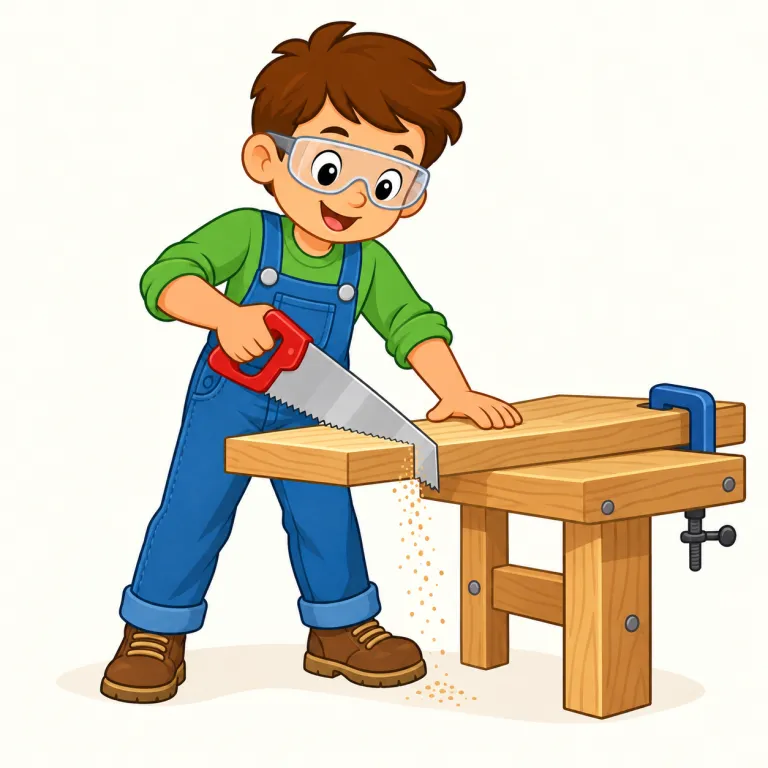
sawing を覚えるポイント・使い方
sawing は saw「のこぎりで切る」の現在分詞・動名詞です。木材などを切っている動作や切る作業を表し、saw の w を残して -ing を付けると覚えましょう。
「~を切っている」と言うときは be動詞+sawing+切る物を使います。たとえば is sawing a board で「板をのこぎりで切っている」です。
He is sawing a board in the garage.
彼はガレージで板をのこぎりで切っています。
のこぎりで切ること
解説 Definition
sawing は saw(のこぎりで切る)の現在分詞・動名詞です。木材や金属などをのこぎりで切っている動作、またはその作業を表します。
Sawing is the action of cutting wood, metal, or another material with a saw, typically by moving a toothed blade back and forth or by using a powered rotating blade. It is the present participle or gerund of saw.
覚え方のコツ Memory Tip
saw「のこぎりで切る」の w を残し、そのまま -ing を付けます。板にのこぎりの刃を当てて切る場面と結び付けましょう。
Keep the w in saw and add -ing directly: sawing. Picture a saw blade cutting through a board.
例文
He is sawing a board in the garage.
彼はガレージで板をのこぎりで切っています。
The worker wore safety glasses while sawing the metal pipe.
作業員は金属パイプをのこぎりで切っている間、安全眼鏡をかけていました。
sawing の類義語・関連語
sawing の語源・成り立ち Etymology
sawing は saw に動作を表す -ing が付いた形で、saw は古英語 sagu「のこぎり」に由来します。さらに印欧祖語の「切る」にさかのぼり、section や bisect と同根だと思うと、「切断する動き」の語だと納得できます。
Sawing is formed by adding -ing to the verb saw. The noun saw comes from Old English sagu, the name of the toothed cutting tool, and the verb developed from use of that tool. The Germanic word is commonly connected with an ancient Indo-European root meaning “to cut,” also reflected in words formed from Latin secare, “to cut.” The modern form preserves the direct tool-to-action relationship.
同じレベルの語彙をもっと
外部辞書で調べる
この英単語をクイズで覚えよう