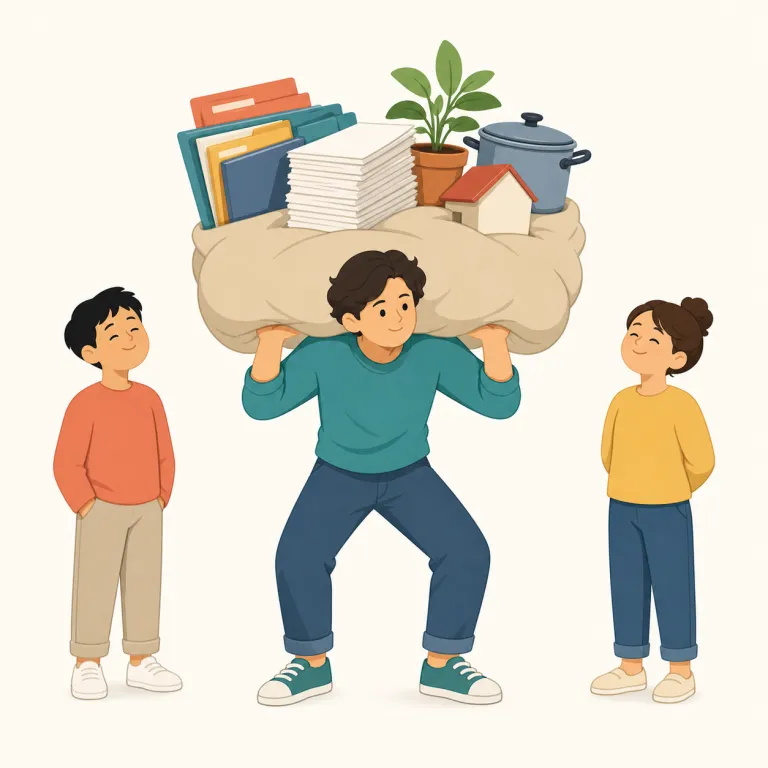
肩に担ぐ、肩で支える
verb 動詞荷物や武器などを肩に載せて運んだり、銃床などを肩に当てて構えたりする物理的な動作を表します。shoulder a bagやshoulder a rifleのように、具体的な物を目的語に取る用法です。
責任や重荷を肩に担ぐこと。比喩的に、困難な任務を引き受けること。
Shouldering means taking on a burden, duty, or responsibility. It can also mean physically carrying something on your shoulder, but it is often used in a more figurative way. The word suggests effort and willingness to deal with something heavy or difficult.
まず簡単な shoulder「肩」を思い出すと入ります。shouldering は「肩に載せる」イメージから、荷物そのものよりも responsibility, blame, cost などの重い役目を自分が引き受ける場面でよく使います。carry が単に運ぶ、bear が我慢して耐える寄りなのに対し、shouldering は『その負担を自分の肩で受け持つ』感じ。文字どおりの肩の動作ではなく、比喩で使われる語だと覚えると定着します。
Start with the simple noun `shoulder`. If you `shoulder` something, you put it on your shoulder, so in figurative use it means taking on a burden yourself. That is why it often appears with words like `responsibility`, `blame`, or `cost`.
She has been shouldering the financial burden of her family since her father's illness.
父親の病気以来、彼女は家族の経済的負担を一手に背負っている。
The young manager found herself shouldering responsibilities far beyond her experience level.
若いマネージャーは自分の経験をはるかに超える責任を背負うことになった。
The small team is shouldering the cost of the project until more funding arrives.
追加資金が届くまで、その小さなチームがプロジェクトの費用を負担している。
文脈によって、次の意味でも使われます。
荷物や武器などを肩に載せて運んだり、銃床などを肩に当てて構えたりする物理的な動作を表します。shoulder a bagやshoulder a rifleのように、具体的な物を目的語に取る用法です。
人や物に肩を当てて押したり、混雑した場所を肩で押し分けて進んだりすることを表します。shoulder someone asideやshoulder one's way throughのような構文で使われ、責任を引き受ける比喩用法とは異なります。
shouldering は Old English sculdor「肩」から来た shoulder に -ing が付いた形です。shoulder や cold-shoulder が同根で、本来は肩で押す・担ぐ動作を指し、そこから責任や負担を「肩に載せて引き受ける」という比喩が生まれました。
Shouldering comes from shoulder, from Old English sculdor, with -ing added. The earliest sense was physical: to push with the shoulder or carry on the shoulder. That concrete image later gave rise to the figurative sense of taking on a duty or burden, as in shoulder and cold-shoulder.
この英単語をクイズで覚えよう