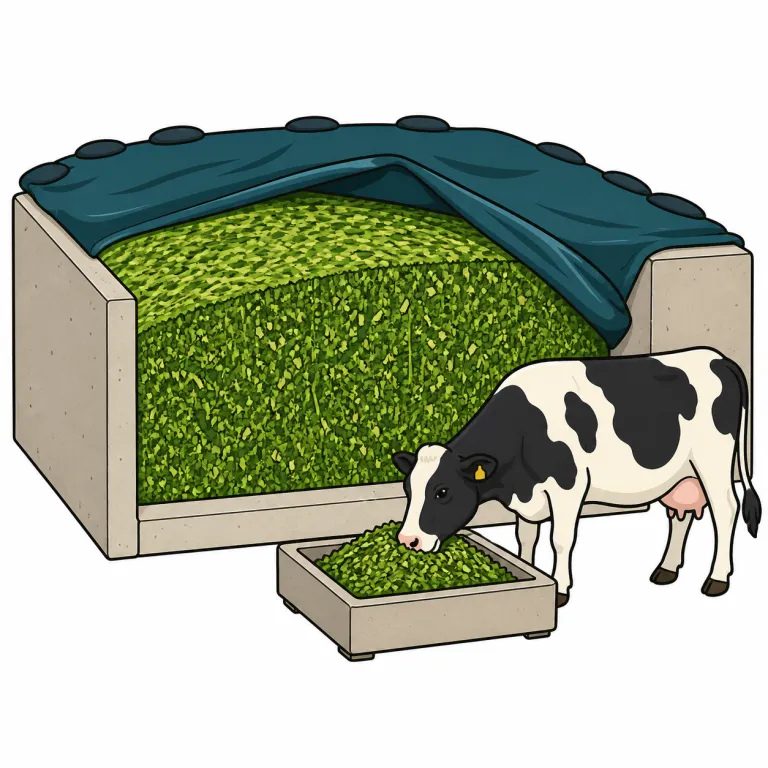
飼料用発酵牧草
解説 Definition
牧草を密閉して発酵させた家畜用の保存飼料。サイロなどで貯蔵される。
Silage is chopped grass, corn, or other plants that are stored and fermented to make animal feed. Farmers use it mainly to feed cows and other livestock, especially when fresh grass is not available. It is a technical word from farming and agriculture.
覚え方のコツ Memory Tip
silo を知っていると覚えやすい語。silage は「サイロで保存するえさ」を核に置くとよい。語形も silo に近く、農場で牧草やトウモロコシを刈り取り、密閉して発酵させ、冬の家畜用に備える場面を頭に浮かべると定着しやすい。corn silage, make silage, feed cattle silage などの形で出やすく、「発酵させた保存飼料」という使い方ごと覚えるのが近道。hay は乾草、silage は水分を残して発酵させた飼料、という対比で整理すると混同しにくい。
If you know `silo`, this word becomes easier. `Silage` is the feed connected with a silo, so picture cut grass or corn stored and fermented for farm animals. It is useful to contrast it with `hay`: hay is dried, but silage is stored moist and fermented.
例文
The farmer stored silage in a large silo for winter feeding.
農家は冬の飼料として大きなサイロにサイレージを貯蔵した。
Making silage from corn is a common practice in dairy farming.
トウモロコシからサイレージを作ることは酪農で一般的な慣行である。
The quality of silage depends on how well it is sealed during fermentation.
サイレージの品質は、発酵中にどれだけしっかり密封されるかによって決まる。
silage の語源・成り立ち Etymology
silage はフランス語 ensilage に由来し、en-「中へ」+ silo「貯蔵庫」+ -age「行為・結果」と考えられる。つまり「サイロに入れること」から、そこで発酵保存された飼料そのものを指すようになった。関連語は silo, ensile。
Silage comes from French ensilage. It is connected with en- "in," silo, and the suffix -age, so the original idea was "putting into a silo." The meaning later shifted from the storing process to the fermented feed stored there; related words include silo and ensile.
同じレベルの語彙をもっと
外部辞書で調べる
この英単語をクイズで覚えよう