ひどく感傷的な、甘ったるい
adjective 形容詞文章・音楽・映画などが過度に感傷的で、わざとらしいほど甘いことを表します。通常は批判的な含みがあり、単に感動的であることよりも、情緒を必要以上に強調する表現を指します。
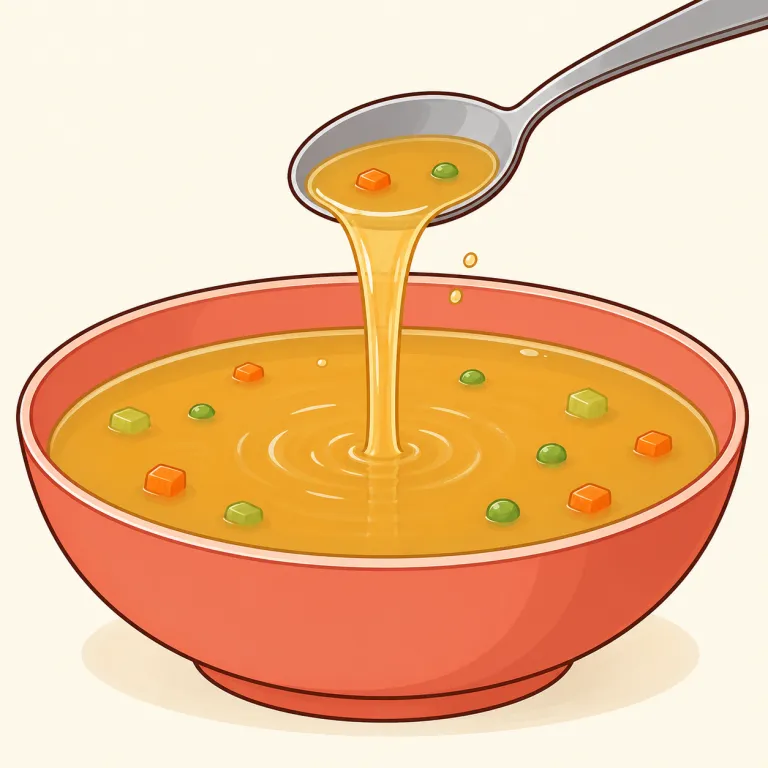
スープのような、液体が多く含まれた状態。食べ物が水分を多く含んでいて、流動的な食感を持つ様子。
Soupy means too liquid, thin, or full of broth, like soup. It is usually used to describe food, especially when the texture is wetter than expected. The word is often slightly negative when something should be thicker.
soup を知っていればかなり覚えやすい語。形は soup + -y で、「〜っぽい」「〜の性質がある」という形容詞パターンなので、soupy = 「スープみたいに液体が多い」と取れる。ほめ言葉とは限らず、料理が水っぽい・汁が多すぎる感じでも使えるのがポイント。watery だと単に水っぽいが、soupy は“具より汁気が目立つ”場面を思い浮かべると定着しやすい。
This is `soup + -y`, and `-y` often means "having the quality of." So `soupy` means something has the feel of soup, with a lot of liquid around it. Remember it beside `watery`, but `soupy` gives a stronger picture of too much broth or sauce.
The stew was too soupy and needed more vegetables.
そのシチューは汁っぽすぎて、もっと野菜が必要だった。
If the mixture becomes too soupy, add more thickening agent.
混合物が汁っぽくなりすぎたら、とろみ剤をもっと加えてください。
The stew had a soupy consistency with little texture.
そのシチューは汁っぽく、具材感がほとんどなかった。
文脈によって、次の意味でも使われます。
文章・音楽・映画などが過度に感傷的で、わざとらしいほど甘いことを表します。通常は批判的な含みがあり、単に感動的であることよりも、情緒を必要以上に強調する表現を指します。
soupy は soup + -y「〜っぽい」。soup はフランス語 soupe を経て、中世ラテン語 suppa「汁に浸したパン」にさかのぼり、sop も同根。もとはパンが汁を吸ってぐずっとした状態なので、「汁っぽい・水っぽい」の感覚が自然に出る。
Soupy is built from soup and the adjective ending -y, meaning "like soup." Soup came through French soupe from Medieval Latin suppa, which referred to bread soaked in broth; English sop comes from the same root. That history helps explain how the word came to suggest something watery, soft, or thick like liquid food.
この英単語をクイズで覚えよう