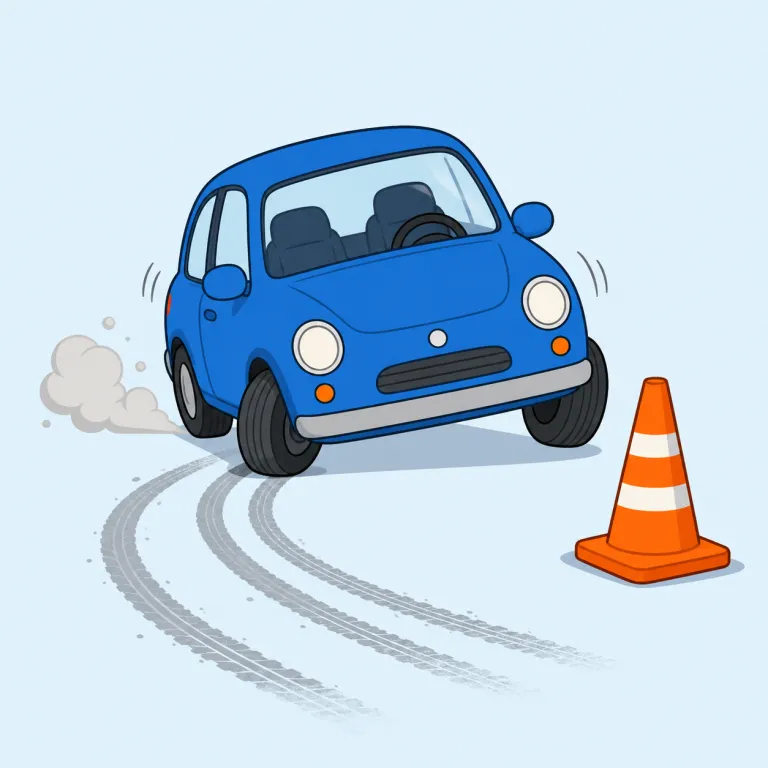
逸脱する、外れる
verb 動詞話題、方針、原則、義務など、従っていた、または従うべき抽象的な道筋から外れることを表します。swerve from one's principles や swerve from one's duty、swerve off the subject などの形で使われ、物理的な方向転換ではない点が異なります。
逸れるとは本来の進路を急激に変えて別方向へ進むことで、状況に応じてなぜそのような動きが必要になったかは異なります。障害物を避けたり対向の危険を回避したりするために、進行路から素早く外れることを示します。乗り物や走者が瞬時に別の方向へ向かうような場面で用いられる語です。
To swerve means to turn or move suddenly to one side. It is often used when a vehicle changes direction quickly to avoid something, but it can also describe any sharp sideways movement. The word often suggests a quick, uncontrolled, or surprising change.
swerve は車や自転車が危険をよけて「急に横へそれる」ときの語。まず curve(カーブする)を思い出すと形が近く、進路がぐっと曲がる感じで覚えやすい。よく swerve to avoid a car / swerve into another lane の形で出る。turn が普通の方向転換、veer がじわっとそれるのに対し、swerve は反射的で急。運転場面の動詞として固定すると記憶に残る。
Think of `curve`: the shape is similar, but `swerve` feels quicker and more sudden. It is the word for moving sharply sideways, especially in driving. The phrase `swerve to avoid` is a strong memory hook.
The car had to swerve to avoid the pedestrian.
その車は歩行者を避けるために急に進路を変えなければなりませんでした。
He swerved off the road to avoid oncoming traffic.
彼は対向車を避けるために急に道路から外れました。
The athlete swerved left to dodge the defender.
そのアスリートはディフェンダーを避けるために急に左へ進路を変えました。
文脈によって、次の意味でも使われます。
話題、方針、原則、義務など、従っていた、または従うべき抽象的な道筋から外れることを表します。swerve from one's principles や swerve from one's duty、swerve off the subject などの形で使われ、物理的な方向転換ではない点が異なります。
中英語 swerven は古英語 sweorfan にさかのぼり、さらにゲルマン祖語で「こする・掃くように動かす」を表した語です。その「横へこすれるように動く」感覚から「進路が逸れる」になり、swarf や swerving に同じ核が残ります。
Swerve comes from Middle English swerven, from Old English sweorfan, a Germanic word connected with rubbing or sweeping movement. The early sense was of moving aside as if brushing or scraping away from a line. From that sideways movement, it came to mean changing direction suddenly; swarf is from the same root family.
この英単語をクイズで覚えよう