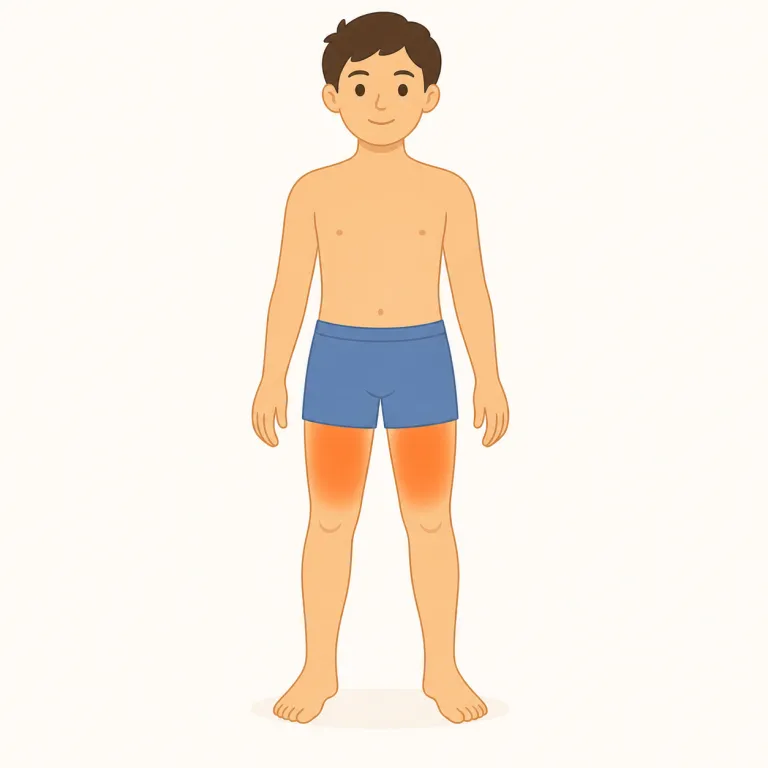
thigh
thigh は英検準1級・TOEIC 860・TOEFL 80・IELTS 6.5レベルの英単語で、「太もも」という意味があります。発音記号は /θaɪ/ です。
太もも
解説 Definition
脚の上部、股関節や臀部の下あたりから膝までの部分を指します。人では太もも、動物や鶏肉などでは同じ部位の肉を表すこともあります。
The thigh is the upper part of the leg between the hip and the knee. It is a large and strong part of the body used for standing, walking, and running. This word is mainly used in medical, sports, and everyday body-related contexts.
覚え方のコツ Memory Tip
thigh は high に th- が付いた形として見ると覚えやすいです。脚の中でも knee より上、体の高い位置にある部分が thigh。leg は脚全体を広く指せますが、thigh は「太もも」に限定されます。よく見るのは thigh muscles, inner thigh, chicken thigh。発音は /θaɪ/ で high と同じ母音、つづりは -gh があっても読まないので、形と音のズレごとセットで覚えると定着します。
Think of `thigh` as the part of the leg that is `high`, above the knee. That makes it easy to separate from `leg`, which can mean the whole leg. Also remember the spelling trick: it sounds like `thai` or `high`, even though the `gh` is silent.
例文
He injured his thigh while playing soccer.
彼はサッカーをしている間に太ももを痛めました。
Thigh muscles are among the strongest in the human body.
太ももの筋肉は人間の体で最も強い筋肉の一つです。
The thigh bone is the longest bone in the human skeleton.
大腿骨は人間の骨格で最も長い骨です。
えいたんごクイズでの正答率
この語をはじめて出題された 31人 のうち 20人 が正解しました(65%)。
えいたんごクイズの回答から集計した独自データです。1人につき最初に出題されたときの1回だけを数えており、復習や2回目以降の回答、「わからない」と時間切れは含みません。 集計時点は 2026年9月19日 です。
thigh の類義語・関連語
紛らわしい語
thigh の語源・成り立ち Etymology
thighは古英語 theoh にさかのぼる古いゲルマン語で、接頭辞や接尾辞に分けにくい身体語です。語根は「ふくらんだ部分・肉のついた所」という感覚につながるとされ、脚の上部を指すのも自然です。関連語にはオランダ語 dij、アイスランド語 þjó などの同根語があります。
Thigh comes from Old English theoh, a very old Germanic body word. It is not easy to divide into smaller parts, but it is linked to the idea of a thick or fleshy part of the body. Related forms appear in other Germanic languages, such as Dutch dij and Icelandic þjó.
同じレベルの語彙をもっと
英検準1級の一覧へ →外部辞書で調べる
この英単語をクイズで覚えよう