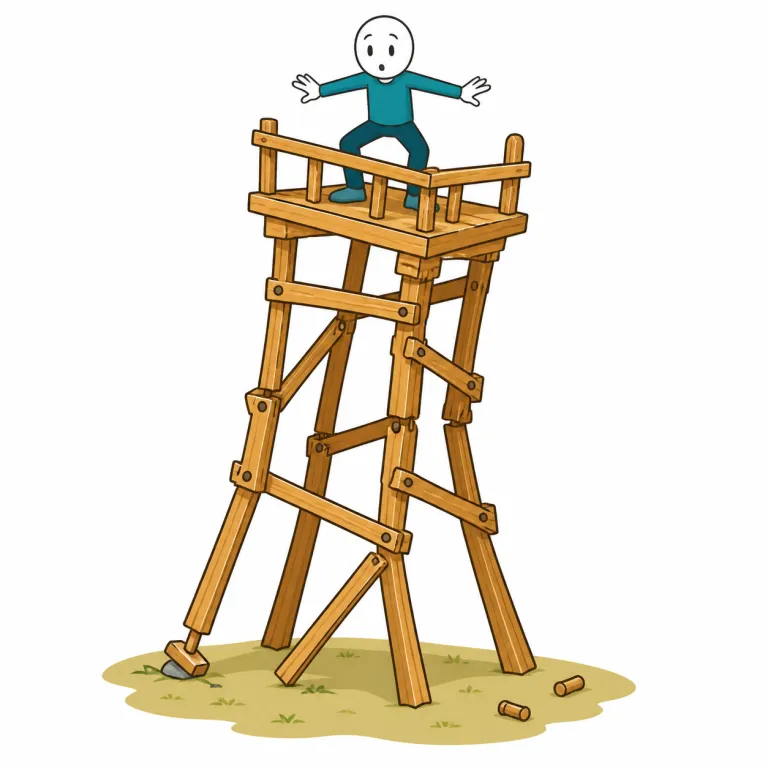
よろよろした、不安定な
解説 Definition
足元や土台が安定せず、今にも倒れそうなほどぐらついている様子を表す。人がよろよろ歩く場合にも、建物や物体が崩れかけている場合にも、経済や組織などが危うく不安定な状態にある場合にも使われる形容詞である。
Tottering means moving or standing in a weak, unsteady way, as if likely to fall. It is often used for people who cannot balance well, especially because of age, tiredness, or injury. It can also describe something unstable in a more general sense.
覚え方のコツ Memory Tip
まず動詞 totter「よろよろ歩く・ぐらつく」を押さえると、totter + -ing で『今まさにぐらついている感じ』だと取りやすい。人なら a tottering old man、建物や体制なら a tottering wall / government のように使え、単なる weak や shaky より『崩れ落ちそうな危うさ』が強い。staggering が大きくふらつく動きなら、tottering は足元や土台が頼りなく、支えを失えば倒れそうな状態を思い浮かべると残りやすい。
Start with the verb `totter`, which means to walk or stand in a weak, shaky way. Add `-ing`, and you can picture something that is shaking right now. Think of common phrases like `a tottering old man` or `a tottering wall` to remember the feeling of almost falling.
例文
The tottering child took a few more steps before falling.
よろよろしたその子どもは、転ぶ前にもう数歩進んだ。
The tottering fence finally collapsed in the wind.
ぐらついていた柵は、ついに風で倒れた。
The government introduced new measures to support the tottering economy.
政府は不安定な経済を支えるために新たな対策を導入した。
tottering の類義語・関連語
tottering の語源・成り立ち Etymology
tottering は totter + -ing で、『ぐらぐら揺れながら進む』様子を表す形です。totter は中英語 toteren にさかのぼりますが語源は不確かで、北欧系の揺れを表す語に近いとされます。tottery や teeter-totter にも同じ響きの不安定さがあります。
"Tottering" comes from totter plus the ending -ing. Totter is found in Middle English, but its deeper origin is uncertain and may be related to northern European words that imitate shaking or unsteady movement. The meaning has stayed close to the original idea of moving with a shaky, unstable motion; compare tottery and teeter-totter.
同じレベルの語彙をもっと
外部辞書で調べる
この英単語をクイズで覚えよう