引っ張る
解説 Definition
tugging は tug(ぐいっと引っ張る)の現在分詞・動名詞です。服の袖やロープなどを、短く強めに引く動作を表すときによく使います。
Tugging is the present participle or gerund of tug. It describes pulling something with a short, forceful movement, often repeatedly, as when a child pulls at a sleeve or someone works a rope to bring a boat closer.
覚え方のコツ Memory Tip
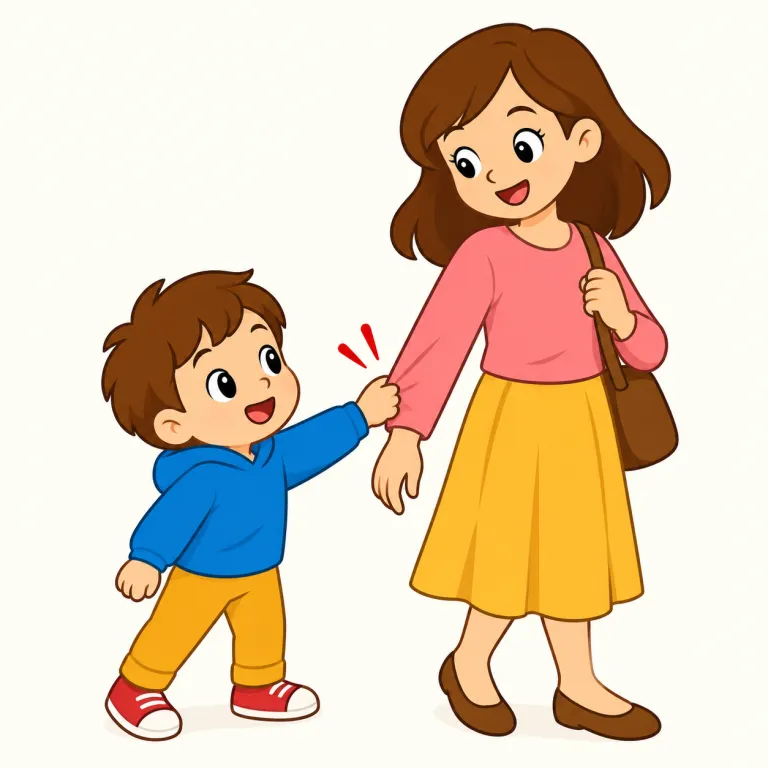
tugging は tug「短く力を込めてぐいっと引く」に -ing を付けた現在分詞・動名詞です。短母音+子音で終わるため g を重ねて tugging とし、/ˈtʌɡɪŋ/ と発音します。tug at a sleeve や tug on a rope のように、袖・ロープ・かばんを一度または繰り返し強く引く場面で覚えましょう。pulling より力強く短い動作です。
Start with tug, a short, forceful pull. Because the word ends in one consonant after a short stressed vowel, double the g before adding -ing: tug becomes tugging. Picture a child tugging at a parent’s sleeve or someone repeatedly tugging on a rope. The useful patterns tug at and tug on emphasize pulling against some resistance. Compared with the general word pulling, tugging usually suggests a brief, strong movement and may imply repetition. The spelling pattern is the same one seen in running and grabbing.
例文
The child was tugging at his mother's sleeve.
その子どもは母親の袖をぐいぐい引っ張っていました。
She kept tugging the rope until the boat moved closer.
彼女はボートが近づくまでロープを引っ張り続けました。
I felt someone tugging my backpack in the crowded station.
混雑した駅で、誰かが私のリュックを引っ張っているのを感じました。
tugging の類義語・関連語
tugging の語源・成り立ち Etymology
tugging は tug「ぐいと引く」に -ing が付いた形で、tug は中英語 toggen にさかのぼり、北欧語系の「引っぱる」語と結びつけて考えられます。短く力を込めて何度も引く感じが核にあり、「ぐいぐい引っ張る」動作がそのまま意味になっていて、関連語に tug, tugboat があります。
Tugging consists of tug plus -ing, with the final g doubled according to the regular spelling pattern for a short stressed vowel followed by one consonant. Tug is found in Middle English as toggen, meaning to pull forcefully, and is associated with Germanic and Scandinavian words of similar meaning. Its long-standing core is a strong or effortful pull. The same idea appears in tugboat, a vessel designed to pull or push other vessels.
同じレベルの語彙をもっと
外部辞書で調べる
この英単語をクイズで覚えよう