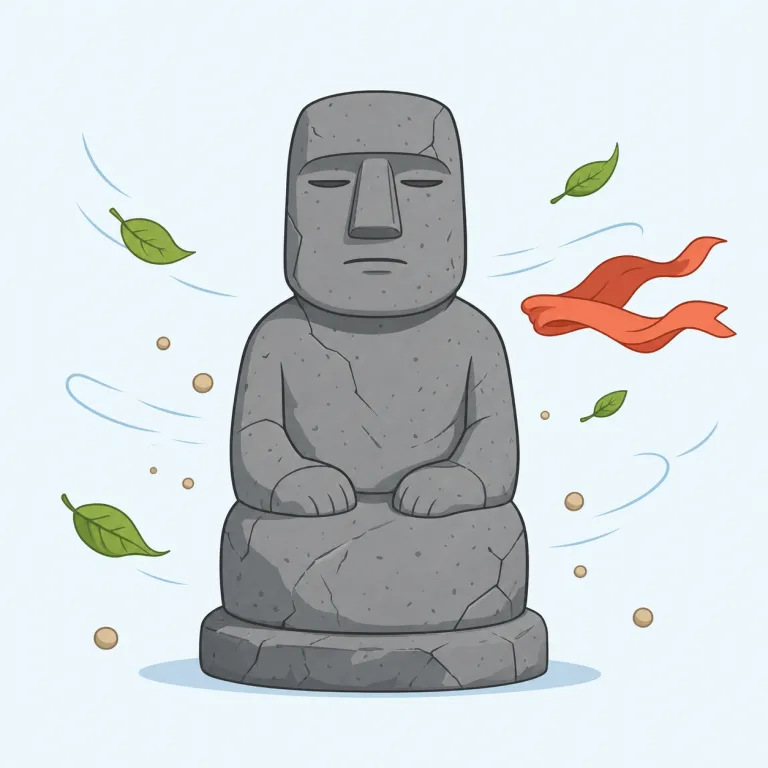
感動を与えない、心を動かさない
adjective 形容詞物語、演技、訴えなどが聞き手や観客の感情を刺激せず、感動的でないことを表します。an unmoving performance のように、物理的に静止しているのではなく、作品などの感情的な効果を評価する用法です。
動きや変化がない状態。静止したままで、不動の。
Unmoving means not moving or staying completely still. It can describe a physical object, a person, or even a face with no visible expression. In a wider sense, it can also mean not emotionally affected or not willing to change.
`move` の現在分詞 `moving` に否定の接頭辞 `un-` が付いた形なので、まずは「動いている」をそのまま打ち消して「動いていない」と取ると覚えやすいです。`still` や `motionless` に近いですが、`unmoving` は「その場でぴたりと変化しない」静かな描写で見かけやすい語。`an unmoving figure / statue / surface` のように、人影・像・水面がじっと止まった場面を結び付けると定着します。`immovable` が「動かせない」性質寄りなのに対し、`unmoving` は「実際に動いていない」見た目寄りです。
See it as `un-` + `moving`. That gives a very direct picture: not moving at all. It often appears in quiet images like `an unmoving face` or `an unmoving figure`, where the focus is on what you can see, not on whether it is possible to move it.
The unmoving guard stood in the center of the plaza.
身じろぎもしない警備員が広場の中央に立っていた。
He remained unmoving during the entire ceremony.
彼は式典の間ずっと動かないままだった。
The unmoving waters of the lake reflected the mountains perfectly.
静まり返った湖面は山々をくっきりと映していた。
文脈によって、次の意味でも使われます。
物語、演技、訴えなどが聞き手や観客の感情を刺激せず、感動的でないことを表します。an unmoving performance のように、物理的に静止しているのではなく、作品などの感情的な効果を評価する用法です。
unmoving は un-「〜でない」+ moving。move はラテン語 movere「動かす」が古フランス語経由で入った語で、motion や remove も同根です。moving「動いている」を un- で打ち消すので、「動きがない・静止している」というこの語義にそのままつながります。
Unmoving combines un- with moving. Move came into English through Old French from Latin movere, meaning "to move" or "set in motion." Because of that root, the word can suggest both "not physically moving" and "not emotionally moved," like related words such as motion and remove.
この英単語をクイズで覚えよう