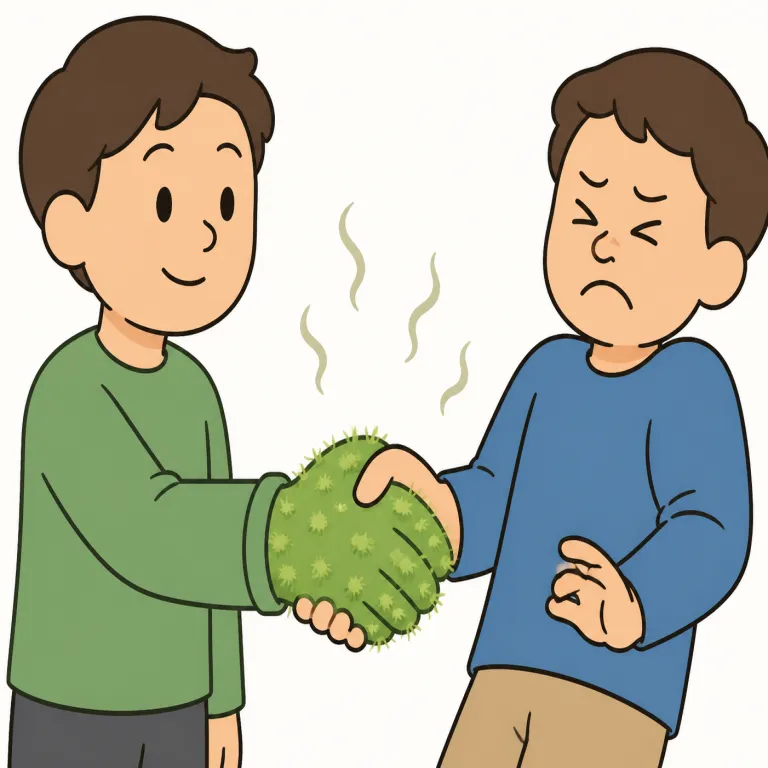
不快に、不愉快に
解説 Definition
人や物事の様子、音、におい、言い方などが、いやな感じを与えることを表します。聞いた人や見た人が不快だ、気分がよくないと感じるような状態を表すときに使います。
In a way that makes someone feel uncomfortable, annoyed, or not pleased. It describes how something happens or feels when it gives a bad or disagreeable impression.
覚え方のコツ Memory Tip
unpleasantly は un-「〜でない」+pleasant「心地よい」+-ly「〜な仕方で」と分け、「人の感覚や気分を悪くさせる様子で」と覚えると定着しやすい語です。形容詞 unpleasant が物や状況そのものを「不快な」と述べるのに対し、unpleasantly は smelled、spoke、felt などを修飾します。smell unpleasantly of smoke「煙のような嫌なにおいがする」、speak unpleasantly to someone「人に不愉快な口調で話す」、feel unpleasantly cold「不快なほど冷たく感じる」の三型を場面ごと押さえましょう。
Pleasant means nice or enjoyable. Add un- for the opposite and -ly to make it mean "in an unpleasant way."
例文
The room smelled unpleasantly of smoke.
その部屋は煙のにおいがして不快でした。
He spoke unpleasantly to the waiter.
彼はウェイターに不愉快な言い方をしました。
The chair felt unpleasantly cold.
そのいすは不快なほど冷たく感じました。
unpleasantly の類義語・関連語
派生語
unpleasantly の語源・成り立ち Etymology
unpleasantly は unpleasant に -ly が付いてできた語です。pleasant は「楽しい、感じのよい」、un- は「そうではない」という意味を加えるので、unpleasant は「感じのよくない」となります。
Unpleasantly is formed from unpleasant plus the adverb ending -ly. Pleasant means "nice" or "agreeable," and un- changes it to the opposite.
同じレベルの語彙をもっと
外部辞書で調べる
この英単語をクイズで覚えよう