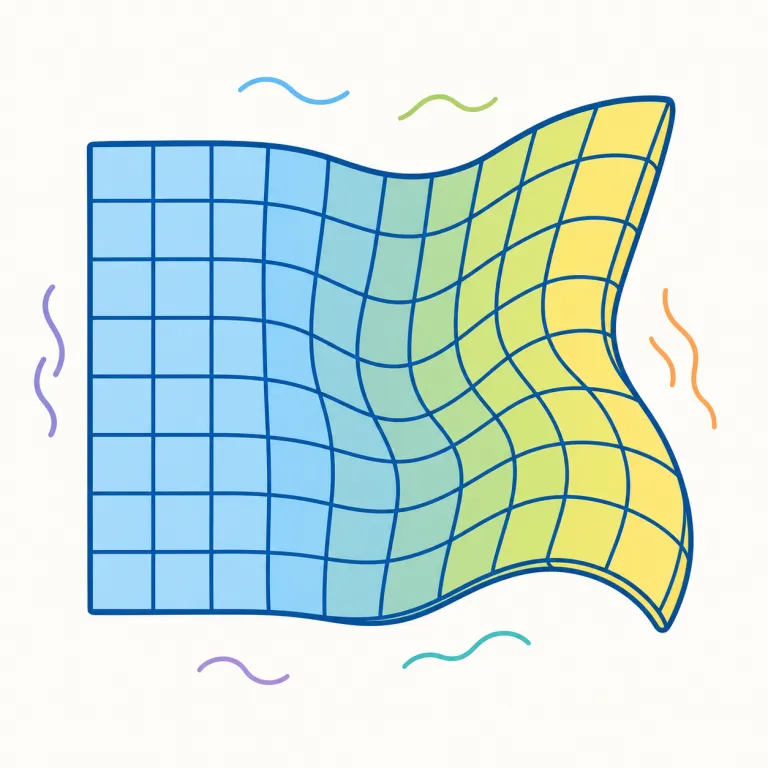
縦糸
noun 名詞織物で、織機に縦方向へ張られる一組の糸を指す。通常は不可算名詞としてthe warp and the weft「縦糸と横糸」の対で用いられ、物の変形や考えのゆがみとは別の織物用語である。
物を曲げたりねじったりして本来の形からゆがめること、または物自体が変形してゆがむことを表します。比喩的に、判断や考え方を悪い方向へゆがめる意味にも使います。
To warp means to bend, twist, or change shape in an unnatural way. It can be used for physical objects such as wood, or for abstract things such as thinking or judgment. The word often suggests damage, pressure, or an unhealthy influence.
「まっすぐ・正常な状態から形が狂う」を核に覚えましょう。木の板が熱や湿気で反る姿から、判断や見方までゆがむイメージにつなげられます。
Remember warp as a change away from the proper shape. Picture a wooden board bending out of shape in heat or moisture, then extend that image to distorted judgment or thinking.
Heat can warp plastic materials.
熱はプラスチック材料をゆがめることがある。
The scandal warped the public's perception of her.
そのスキャンダルは、彼女に対する世間の見方をゆがめた。
The door warped in the humidity.
そのドアは湿気でゆがんだ。
文脈によって、次の意味でも使われます。
織物で、織機に縦方向へ張られる一組の糸を指す。通常は不可算名詞としてthe warp and the weft「縦糸と横糸」の対で用いられ、物の変形や考えのゆがみとは別の織物用語である。
warpは古英語 weorpan「投げる・向きを変える」に由来し、もとは「まっすぐな所から投げ出す」感覚を含む語。そこから「形を曲げる、ゆがめる」の意が育った。関連する語には英語 warp「縦糸」やドイツ語 werfen があり、「向きがずれる」感じが核にある。
Warp comes from Old English weorpan, meaning "to throw" or "turn." The original idea was movement away from a straight course, and this later developed into the sense of bending or twisting out of shape. It is related to the noun warp in weaving and to German werfen, "to throw."
この英単語をクイズで覚えよう