腕をぐるぐる回す
verb 動詞腕を風車の羽根のように大きく連続して回す動作を表す動詞。armsを目的語に取る形や、腕を主語とする自動詞用法で、泳ぎ・投球・転びそうな場面などの激しい回転に使われます。
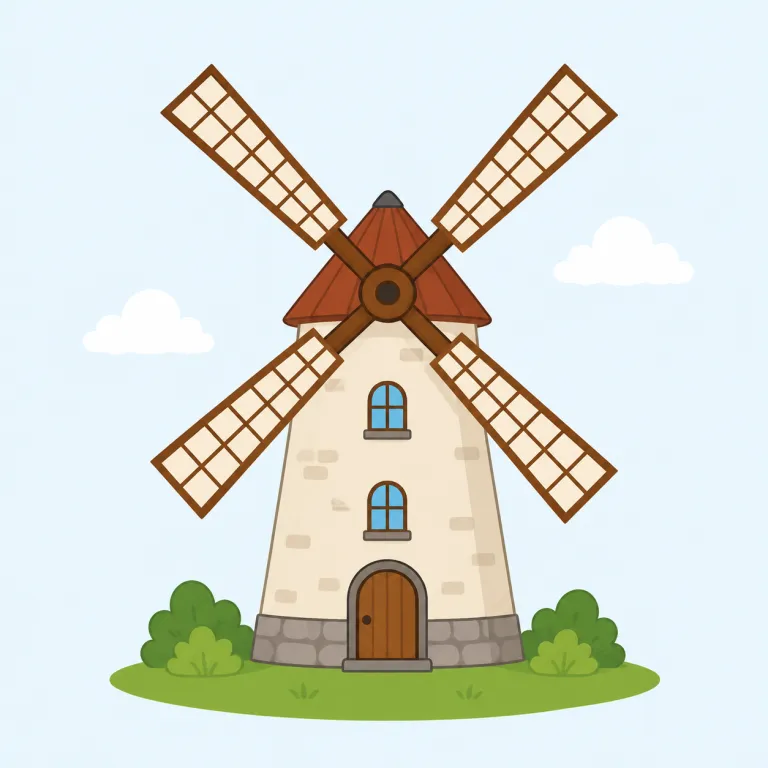
windmill は英検準1級レベルの英単語で、「風車」という意味があります。発音記号は /ˈwɪndˌmɪl/ です。
風車は風の力で羽根が回転する機械です。回転する力は穀物の粉挽きや水の汲み上げなどに使われます。建物の形や羽根の長さは用途や技術によって異なり、風向きに合わせて調整されます。
A windmill is a structure with large blades that turn in the wind. Traditionally, it is used to grind grain or pump water, though similar modern machines are used to produce electricity. The word often refers especially to older, traditional buildings.
wind と mill に分けると覚えやすい。wind は「風」、mill は coffee mill などの「ひいて粉にする機械」。つまり windmill は「風で回る mill」だとつながる。羽根が回って小麦をひく古い建物の映像をセットで思い浮かべると定着しやすい。発電中心の wind turbine と違い、windmill は粉ひき・くみ上げなど機械全体を指す場面が多いので、その使い分けも一緒に覚える。
Break it into wind + mill. A mill is a machine that grinds something, so a windmill is a mill moved by wind. Picture the old building with large turning blades, and keep it separate from wind turbine, which is more about producing electricity.
The old windmill still stands on the hill.
古い風車はまだ丘の上に立っている。
The windmill's blades rotated in the breeze.
風車の羽根はそよ風を受けて回った。
They visited the historic windmill.
彼らは歴史的な風車を訪れた。
文脈によって、次の意味でも使われます。
腕を風車の羽根のように大きく連続して回す動作を表す動詞。armsを目的語に取る形や、腕を主語とする自動詞用法で、泳ぎ・投球・転びそうな場面などの激しい回転に使われます。
windmill は wind「風」と mill「ひき臼・製粉機」を合わせた複合語です。wind は古英語、mill はラテン語 molina 由来で、文字どおり「風で回す製粉機」から風車の意味になりました。関連語は mill, molar。
Windmill is made from wind and mill. Wind comes from Old English, while mill came through Latin from a word meaning a grinding machine. At first it meant a mill powered by wind, and from there it came to mean the familiar tower or structure with turning sails.
この英単語をクイズで覚えよう