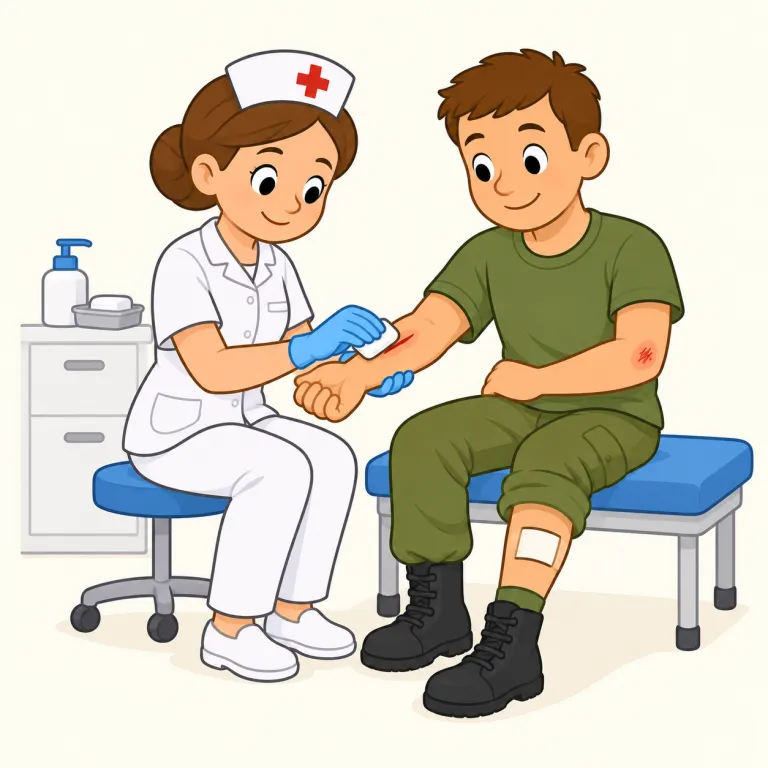
傷
解説 Definition
wounds は「傷」や「負傷」を表す名詞 wound の複数形です。切り傷や刺し傷などの体のけがだけでなく、心の傷を指すこともあります。
Wounds are injuries in which the body is cut, torn, pierced, or otherwise damaged. The plural noun can also refer figuratively to lasting emotional pain caused by distressing experiences, conflicts, or hurtful words.
覚え方のコツ Memory Tip
wound(傷)の規則的な複数形で、この名詞は /wuːnd/、wounds は語末が有声音なので /wuːndz/ と発音する。身体なら clean wounds、heal wounds、心なら old wounds、open old wounds が典型表現。「巻いた」の wound /waʊnd/ は wind の過去形なので発音と意味を分ける。
Wounds is the regular plural of the noun wound, an injury. The noun wound is pronounced /wuːnd/, and its plural ending sounds like /z/: /wuːndz/. Associate physical wounds with verbs such as clean, treat, and heal. For emotional harm, remember the common expressions old wounds and open old wounds, in which painful memories are compared to injuries. Be careful with wound pronounced /waʊnd/: that is the past tense of wind, as in “She wound the clock,” and it has a different meaning and pronunciation.
例文
The nurse cleaned the soldier's wounds carefully.
看護師はその兵士の傷を注意深く洗浄した。
Some wounds take a long time to heal.
傷の中には治るまでに長い時間がかかるものもある。
His words opened old wounds in the family.
彼の言葉は家族の古い心の傷を呼び起こした。
wounds の類義語・関連語
wounds の語源・成り立ち Etymology
古英語wund(傷)に由来し、ゲルマン祖語*wundōにさかのぼる。ドイツ語Wundeも同根。「戦いで受けた切り傷」が原義で、現在は身体的・精神的な傷の両方に使われる。関連語:wounded(負傷した)。
Wound comes from Old English wund, meaning an injury or hurt, and is related to forms in other Germanic languages, including German Wunde. Wounds is created by adding the regular plural ending -s to the noun. Although the word first referred to physical injury, English later extended it metaphorically to emotional suffering, allowing experiences or words to leave or reopen psychological wounds.
同じレベルの語彙をもっと
外部辞書で調べる
この英単語をクイズで覚えよう