求心性
解説 Definition
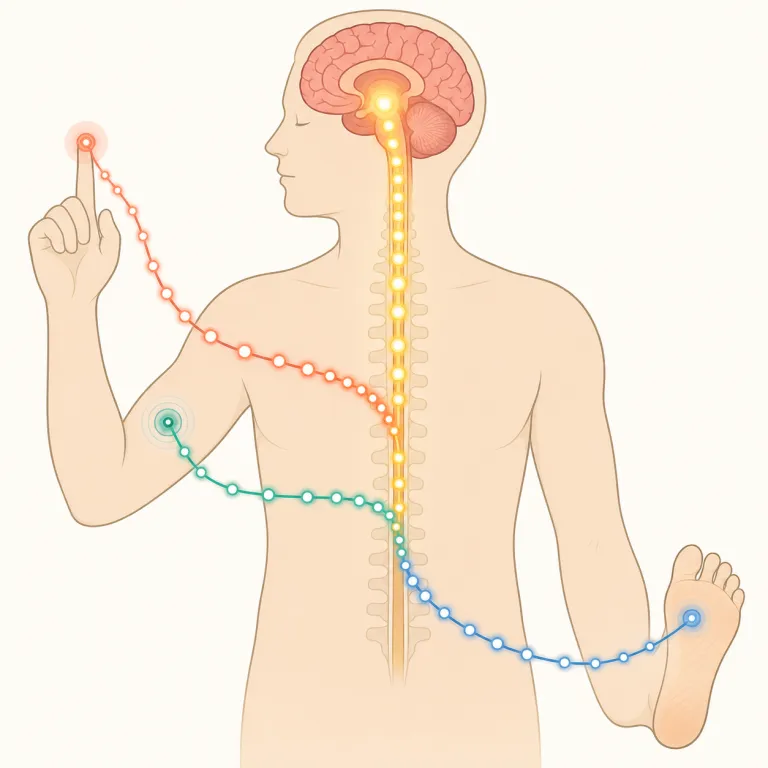
神経が末梢から中枢に向かって信号を伝える性質。求心性神経のこと。
Afferent describes nerves or pathways that carry signals toward a central organ, especially toward the brain or spinal cord. It is mainly used in biology, anatomy, and medicine. This is a technical term and is often contrasted with efferent, which carries signals away.
覚え方のコツ Memory Tip
まず efferent とセットで対比して覚えるのが最短です。afferent は「中へ入ってくる側」、efferent は「外へ出ていく側」。神経では afferent nerve / afferent pathway が、皮膚や筋肉など末梢で受けた感覚入力を brain や spinal cord に運ぶイメージ。a- は arrival のように“中心へ到着”、e- は exit のように“中心から出る”と置くと、求心性と遠心性の取り違えを防ぎやすいです。
Learn it as the partner of `efferent`. `Afferent` goes in toward the center, while `efferent` goes out. You can link `a-` with `arrival` and imagine signals arriving at the brain or spinal cord.
例文
Afferent nerves carry sensory information from the body to the brain.
求心性神経は身体から脳へ感覚情報を伝える。
Damage to the afferent pathways can result in a loss of sensation.
求心性経路の損傷は感覚の喪失を引き起こすことがある。
The afferent signals from the injured finger alerted the brain to the pain.
負傷した指からの求心性信号が脳に痛みを知らせた。
afferent の類義語・関連語
対義語
afferent の語源・成り立ち Etymology
afferent はラテン語 ad-「〜へ」+ ferre「運ぶ」から来た afferre に由来し、-ent は「…する性質の」。offer や transfer も ferre を含む同根語で、情報を外側から中枢へ「運び込む」向きだと考えると、求心性の意味がそのまま腑に落ちる。
Afferent comes from Latin afferre, meaning "to carry to," from ad- "to" and ferre "to carry." It is related to words such as offer and transfer, which share the same Latin root. The meaning stayed close to the original idea: something that carries signals inward toward a center.
同じレベルの語彙をもっと
外部辞書で調べる
この英単語をクイズで覚えよう