遠心性
解説 Definition
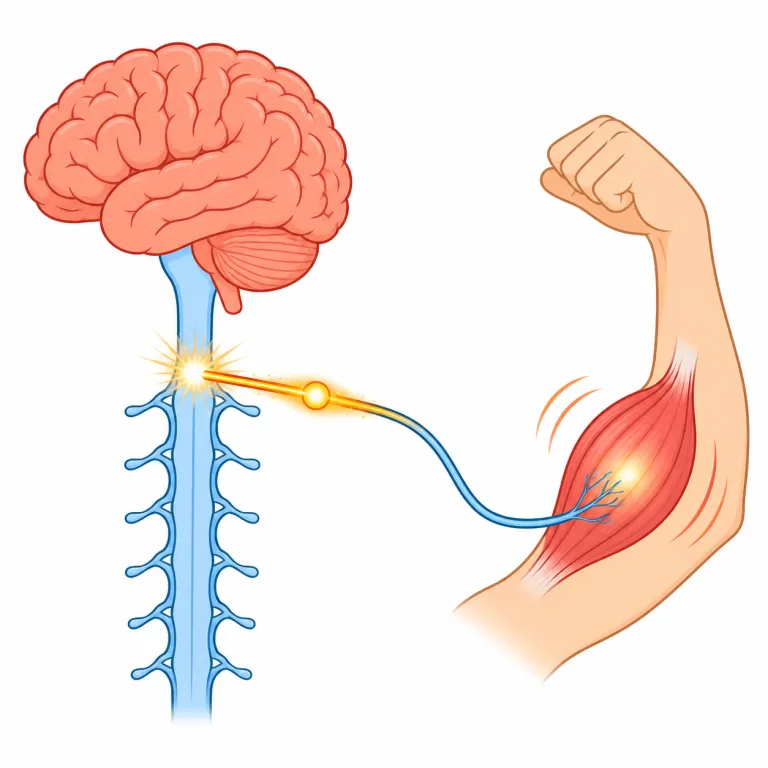
解剖学における、中枢神経系から遠ざかる方向に信号を送る神経。遠心性の経路は脳や脊髄から末梢器官へ向かう。
Efferent means carrying signals, fluid, or information away from a central part of the body. It is a technical word mainly used in biology and medicine, especially for nerves that send messages from the brain or spinal cord to muscles or glands.
覚え方のコツ Memory Tip
まず対語の afferent とセットで覚えるのが最短です。神経では afferent が『入ってくる入力』、efferent が『外へ出ていく出力』。脳・脊髄をPC本体だと思うと、efferent は本体から筋肉や器官へ命令を送るケーブル。実際も motor/efferent nerve のように運動命令の文脈で出やすく、感覚を集める afferent と対比されます。迷ったら『e = exit, emit の e』を手掛かりにして、中心から末梢へ出る矢印を思い浮かべると定着します。
Remember it together with `afferent`. In the nervous system, `afferent` brings signals in, but `efferent` sends signals out. Use `e = exit` as your hook, and picture an arrow going from the brain or spinal cord out to muscles or organs.
例文
Efferent nerves carry signals away from the central nervous system.
遠心性神経は中枢神経系から末梢へ信号を運ぶ。
The efferent pathway connects the brain to the muscles.
遠心性経路は脳と筋肉を接続する。
Efferent neurons transmit motor commands to the body.
遠心性ニューロンは体に運動指令を伝える。
efferent の類義語・関連語
類義語
efferent の語源・成り立ち Etymology
efferent はラテン語 efferens に由来し、ex-/ef-「外へ」+ fer「運ぶ」から成ります。transfer や offer も同じ ferre「運ぶ」にさかのぼり、核は「何かを外へ運ぶこと」です。中心から外側へ信号や流れを送るので「遠心性」の意味になりました。
Efferent comes from Latin efferens, from ex-/ef- "out" and ferre "to carry." Its central idea is "carrying outward." In scientific use, that became the sense of something moving or sending signals away from a center. Related English words from the same root include offer, transfer, and refer.
同じレベルの語彙をもっと
外部辞書で調べる
この英単語をクイズで覚えよう