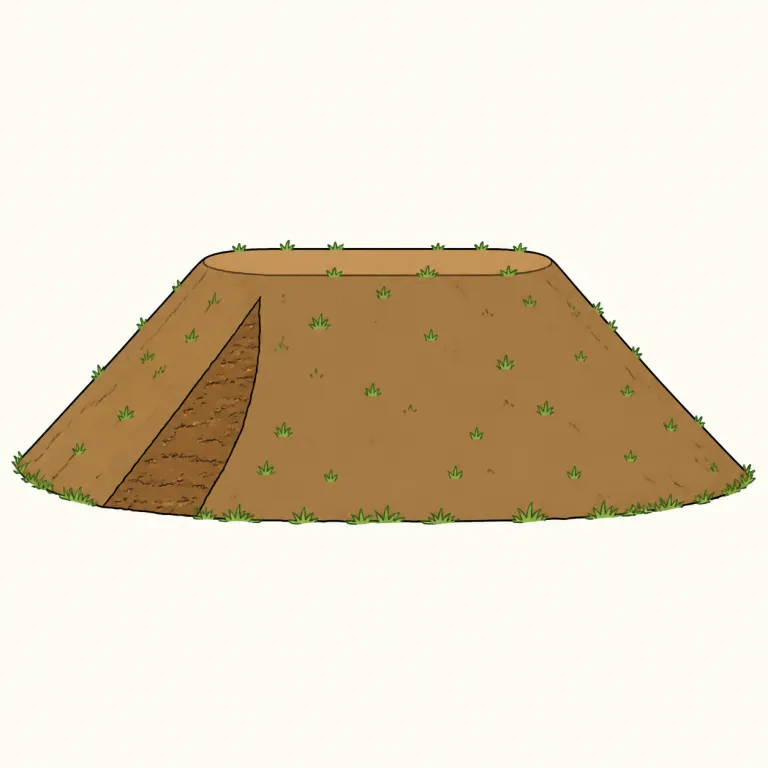
土塁・盛り土
解説 Definition
古代ローマの道路や防御施設に用いられた土を盛り上げて作った堤防や土塁。
An agger is a raised bank or ridge of earth, especially one made by people. The word is mainly used in technical, historical, archaeological, or medical contexts rather than everyday English.
覚え方のコツ Memory Tip
agger は日常語ではないので、つづりより「使われる場面」で覚えるのが有効です。road や fortification と一緒に出たら、「土を高く盛って作る防御・通行用の構造物」を連想すると定着しやすいです。自然の hill ではなく、人が築いた earthwork / embankment 寄りの語。紛らわしいのは ditch や moat で、こちらは「掘って作る側」、agger は「盛って作る側」と対比すると覚えやすくなります。
This word is best remembered by its context. If you see it near `road`, `fort`, or `earthwork`, think of raised earth built by people, not a natural hill. A good contrast is: a `ditch` or `moat` is dug down, but an `agger` is built up.
例文
Archaeologists discovered an agger along the Roman road near the village.
考古学者が村の近くのローマ街道沿いに土塁を発見した。
The agger served as both a road foundation and a defensive barrier.
その土塁は道路の基盤と防御壁の両方の役割を果たしていた。
Traces of the ancient agger can still be seen in the landscape today.
古代の土塁の痕跡は、今でもその景観に残っている。
agger の類義語・関連語
agger の語源・成り立ち Etymology
agger はラテン語 agger「土塁・盛り土」から入った語です。これは ad-「〜へ」+ gerere「運ぶ」から成り、「土を運んで積み上げたもの」という成り立ちが、そのまま土塁や盛り土の意味につながります。関連語は congest, suggest。
Agger comes directly from Latin agger, meaning "rampart," "embankment," or "heap." It is connected with the idea of carrying and piling things up, from the Latin verb gerere, "to carry." The word therefore originally meant something built by bringing earth or material together into a raised mass. The same root appears in words such as congest and suggest.
同じレベルの語彙をもっと
外部辞書で調べる
この英単語をクイズで覚えよう