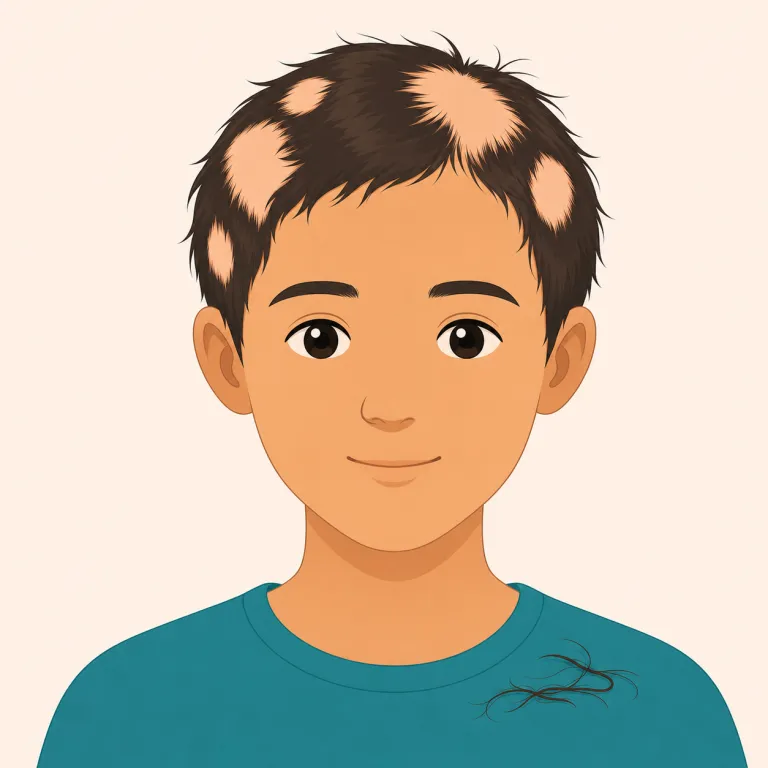
脱毛症
解説 Definition
医学的には、様々な原因による脱毛または髪の喪失を指す状態です。ストレス、遺伝、病気など複数の要因が関与する場合があります。
Alopecia is a medical condition that causes hair loss from the head or other parts of the body. Hair loss may be temporary or permanent, depending on the type and cause. This is a medical term rather than an everyday word.
覚え方のコツ Memory Tip
alopecia は日常語の hair loss や baldness より一段専門的で、「髪が抜けること」そのものより診断名として出てくる語だと押さえると覚えやすいです。語尾の -ia は pneumonia, insomnia などと同じく「状態・病気」を表すことが多く、医療語の目印になります。dermatology, treatment, autoimmune, scalp などと並びやすく、特に alopecia areata の形で見かけたら「脱毛症の医学用語だ」と結びつけると定着します。
This is a medical word, so notice the ending `-ia`, which appears in condition names like `insomnia` or `pneumonia`. That helps you file it as a diagnosis word rather than an everyday word like `hair loss`. It is often seen near words like `treatment`, `scalp`, or `alopecia areata`.
例文
Alopecia can be caused by genetics, stress, hormonal imbalances, or medical conditions.
脱毛症は、遺伝的要因やストレス、ホルモンバランスの乱れ、病気などによって起こることがあります。
The dermatologist diagnosed the patient with androgenetic alopecia, commonly known as male pattern baldness.
皮膚科医は患者をアンドロゲン性脱毛症(一般的に男性型脱毛症として知られている)と診断した。
Some individuals with alopecia use wigs or hair transplants to manage their condition.
脱毛症の人の中には、かつらを着けたり毛髪移植を受けたりして対処する人もいます。
alopecia の類義語・関連語
alopecia の語源・成り立ち Etymology
alopecia はギリシャ語 alopekia が語源で、もとは alopex「キツネ」から「キツネの毛が抜ける様子」を指しました。alopecic や alopecoid も同根で、病名が動物の見た目の比喩から生まれたと知ると脱毛症の語感が印象に残ります。
`Alopecia` comes from Greek `alopekia`, which is linked to `alopex`, meaning "fox." The connection seems to be the fox's patchy loss of fur, which gave the word an image of hair falling out. That animal comparison later became the medical term for hair loss in general. Related forms include `alopecic`.
同じレベルの語彙をもっと
外部辞書で調べる
この英単語をクイズで覚えよう