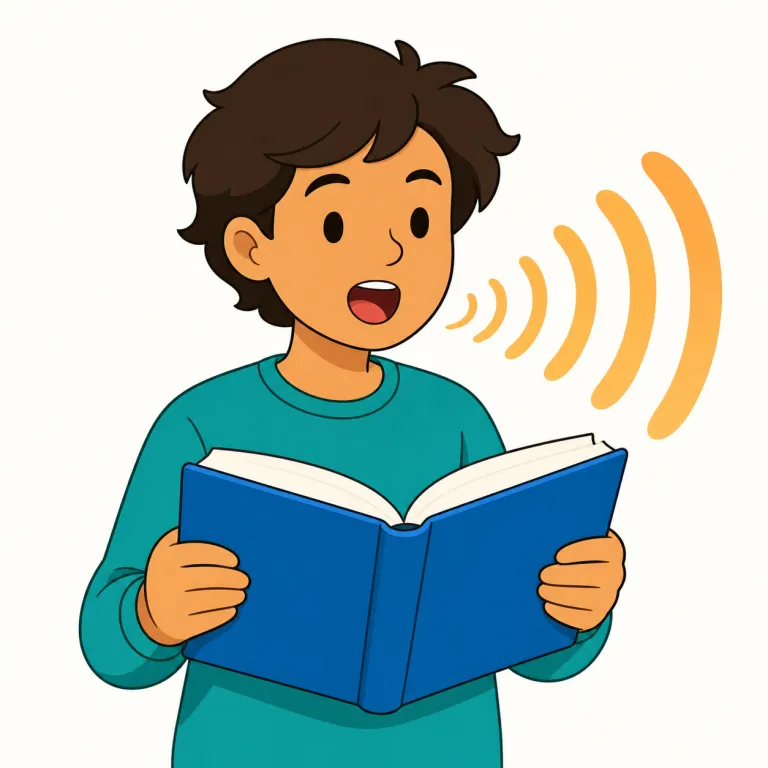
声に出して
解説 Definition
この副詞は、声を使って話したり読んだりすることを表す表現です。見たり考えたりしている内容を黙読ではなく、言葉として口に出すときに使います。周囲に聞こえるように思いや反応をそのまま声に出す場面でも使われます。
Aloud means in a voice that can be heard, not silently. It is used when someone reads, speaks, or thinks using spoken words. It often contrasts with reading or thinking quietly to yourself.
覚え方のコツ Memory Tip
まず loud「聞こえるほど声や音が出ている」を土台にすると覚えやすいです。aloud は a + loud と見て、「声が外に出ている」と捉えると記憶に残ります。read aloud, say aloud, think aloud が定番で、共通するのは「黙ってではなく、口に出して」。日本語の『大声で』に引っぱられすぎず、loudly が音量の大きさ、aloud は発話したかどうかに焦点があると切り分ける。黙読ではなく音読、心の中ではなく口から出す場面をまとめて結び付けると定着します。
The prefix "a-" often appears in old adverbs like "awake" or "ashore," so "aloud" has a slightly literary feel. Remember it as words or sounds coming out where others can hear them: read aloud, laugh aloud, cry aloud. For simple volume, English usually prefers "loudly."
例文
The teacher asked the students to read the passage aloud.
教師は生徒たちにその一節を声に出して読むよう求めた。
She was thinking aloud, not actually talking to anyone.
彼女は考えていることを声に出していただけで、実際に誰かに話しかけていたわけではなかった。
He laughed aloud when he heard the joke.
彼はそのジョークを聞いて声を出して笑った。
aloud の類義語・関連語
aloud の語源・成り立ち Etymology
aloud は a-+loud からできた語で、a- は古英語 on「〜の状態で」が弱まった形、loud は古英語 hlud「音の大きい・聞こえる」に由来する。もともとは「聞こえる声の状態で」という感じで、中心は単なる音量より「声に出して」。文脈によって「大声で」にもなるが、loudly とは焦点が違う。
Aloud is made from a- and loud. The a- comes from an old reduced form of on, meaning "in a state of," and loud comes from Old English hlud, meaning "noisy" or "loud." So the word originally meant something like "in a loud state," and then came to mean speaking so that the voice is heard. The same a- appears in words like awake and ashore.
同じレベルの語彙をもっと
外部辞書で調べる
この英単語をクイズで覚えよう