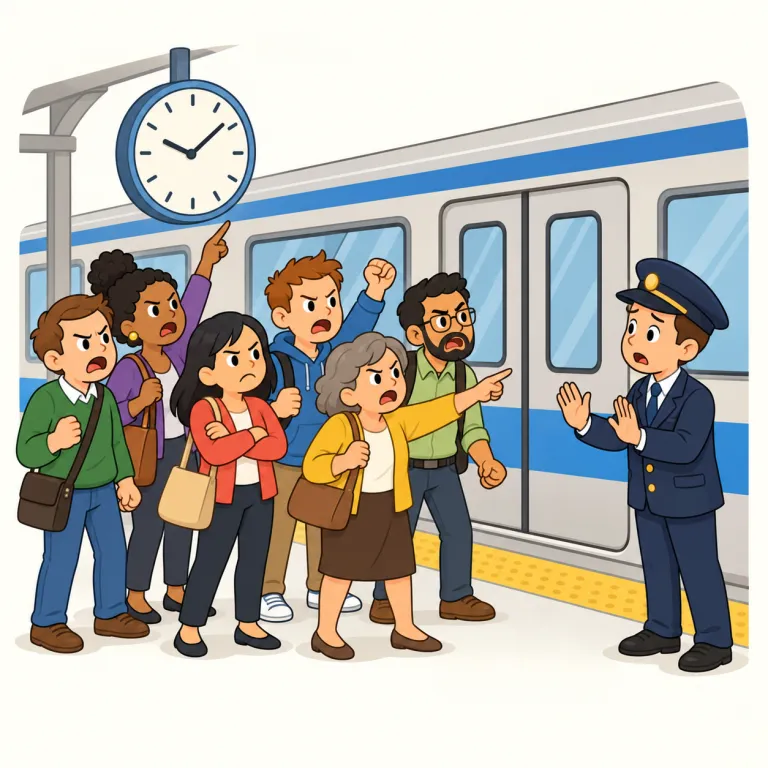
怒らせている;怒らせること
解説 Definition
angering は anger「怒らせる」の現在分詞・動名詞です。人や集団を「怒らせている」状況や、「怒らせること」という行為を表します。
The present participle and gerund form of anger, meaning causing someone to become angry. It can describe an action in progress or function as a noun-like expression for the act of provoking anger.
使い方 Usage
- be動詞+angering+人は、誰かを怒らせている状況を表します。was angering passengers なら「乗客を怒らせていた」です。 Use be + angering + a person for an ongoing action or effect. Was angering passengers means it was causing passengers to become angry.
- Angering the customer のような動名詞句は、「顧客を怒らせること」として文の主語にできます。 A gerund phrase such as Angering the customer can serve as the subject and refer to the act of making the customer angry.
使い分け Common distinctions
- angering は相手を怒らせる側を表します。主語自身が怒ることは be angry や become angry で表せます。 Angering describes causing someone else to feel angry. Use be angry or become angry when the subject experiences the emotion.
覚え方のコツ Memory Tip
anger に -ing を付けた形です。強勢のない -er で終わるので、r を重ねず angering と綴ります。
Add -ing to anger. Because the ending -er is unstressed, do not double the r: angering.
例文
The delay was angering many passengers.
その遅れは多くの乗客を怒らせていました。
Angering the customer will not solve the problem.
顧客を怒らせても問題は解決しません。
angering の類義語・関連語
angering の語源・成り立ち Etymology
angering は anger に動名詞語尾 -ing が付いた形。anger は古ノルド語 angr/angra「苦しみ・悩ませる」に由来し、さらに印欧祖語 *angh-「締めつける」へさかのぼる。胸が締めつけられる感覚から「怒り」が出たと考えると覚えやすい。関連語は anguish, angst。
Angering is the -ing form of the verb anger. The base word entered English through Old Norse angr, “grief” or “distress,” and angra, “to trouble or grieve.” These forms are associated with a Germanic and Indo-European family expressing tightness, constriction, or distress, also reflected in anguish and angst. In modern English, verbal anger is transitive: to anger someone is to cause that person to feel anger.
同じレベルの語彙をもっと
外部辞書で調べる
この英単語をクイズで覚えよう