anode
anode はTOEFL 100・IELTS 7.5レベルの英単語で、「陽極」という意味があります。発音記号は /ˈænoʊd/ です。
陽極
解説 Definition
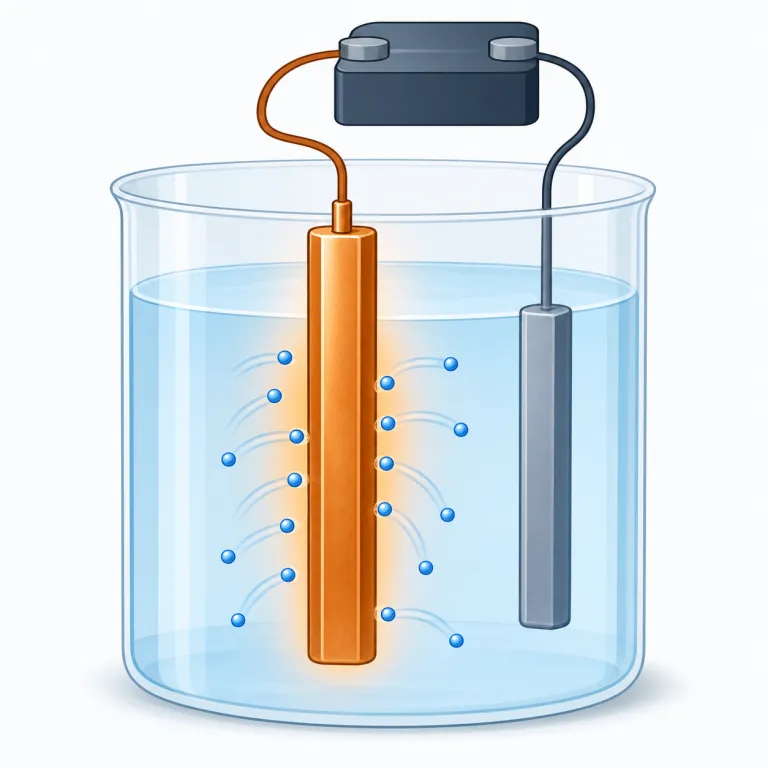
anode は、電気化学や電子工学で使われる電極の一つで、酸化が起こる電極を指します。電子が外部回路へ出ていく側として説明されることが多い語です。電池か電気分解かなど文脈によって正負は変わるため、「常にプラスの電極」とは限りません。
An anode is the electrode where electric current enters a device, or where oxidation happens in a chemical system. It is used in subjects like physics, chemistry, and electronics. The exact role of the anode can change depending on the type of battery or circuit.
覚え方のコツ Memory Tip
単独で覚えるより、cathode と対で固定すると残りやすい語です。電池や電気分解の説明で anode/cathode が並んだら、「anode は酸化が起こり、電子が外へ出ていく側」と1セットで思い出すのが近道です。-ode は電極名でよく見かける語尾なので、まず“電極の仲間”として認識すると整理しやすくなります。positive electrode と結びつけたくなりますが、装置や文脈で正負は変わるので、まずは『酸化・電子が出る側』を軸に覚えると混乱しにくいです。
Do not memorize this word alone; fix it as a pair with cathode. The safest memory hook is that the anode is the side where oxidation happens and electrons leave. That is better than depending only on "positive," because the sign can change by context.
例文
The anode in a battery is where oxidation occurs.
電池の陽極は酸化が起こる場所である。
Electrons flow away from the anode during discharge.
放電中、電子は陽極から流出する。
The anode must be made of a suitable material for electroplating.
めっきを行うには陽極は適切な材料で作られる必要がある。
anode の類義語・関連語
対義語
紛らわしい語
anode の語源・成り立ち Etymology
anode はギリシャ語 anodos「上への道」からで、ana-「上へ」+ hodos「道」の組み合わせです。電流が上っていく側という初期の見方が名に残り、ただの電極名でなく「流れの向き」を感じさせます。cathode や method も同じ hodos 系です。
Anode comes from Greek anodos, meaning "way up," from ana- "up" and hodos "road" or "way." Early scientists used the word with the idea of current moving upward or inward along a path. That older picture of direction stayed in the name even after electrical theory became more precise. Related English words from the same root include cathode and method.
同じレベルの語彙をもっと
TOEFL 100の一覧へ →外部辞書で調べる
この英単語をクイズで覚えよう