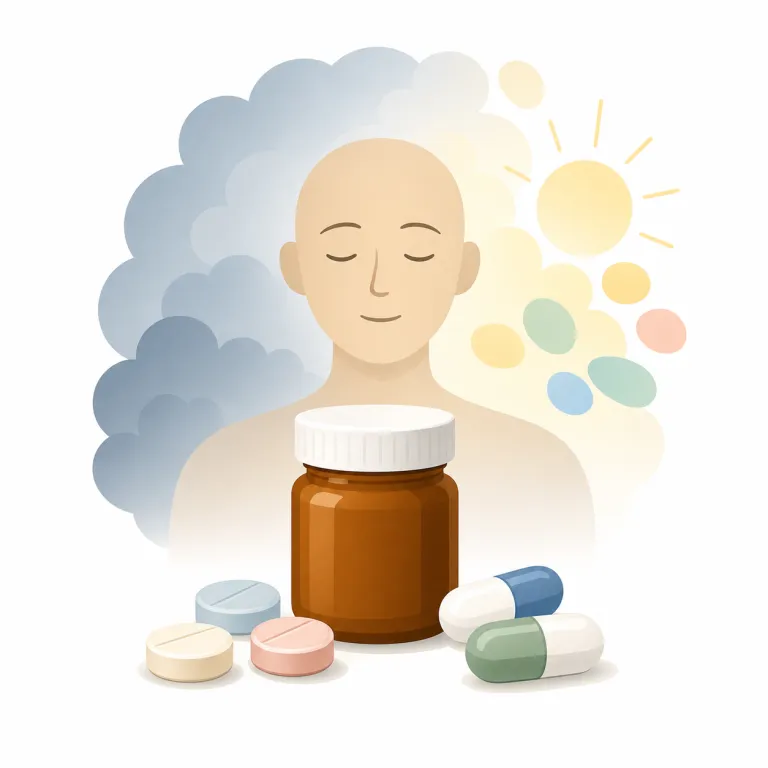
抗うつ薬
解説 Definition
うつ病の症状を軽減するために処方される薬剤。脳内の神経伝達物質のバランスを調整する働きがある。
Antidepressants are medicines used to treat depression and some related mental health conditions, such as anxiety. They help improve mood by affecting certain chemicals in the brain. The word is usually used in medical or health-related contexts.
覚え方のコツ Memory Tip
antidepressants は antidepressant の複数形。まず depress を「気分を落ち込ませる」、depression を「うつ」とセットで押さえると、anti- が付いて「落ち込みに対抗する薬」と自然に読めます。医療文脈でよく出て、take antidepressants, prescribe antidepressants, be on antidepressants などの形で覚えると定着しやすいです。sedatives のような単なる鎮静薬と混同せず、「うつ症状を和らげるための薬」という用途で固定すると残ります。
Start with `depress` and `depression`, then add `anti-`, a common prefix meaning "against." So `antidepressants` are medicines that work against depression. Remember common phrases like `take antidepressants`, `prescribe antidepressants`, and `be on antidepressants`.
例文
During the pandemic, many people started taking antidepressants to help with anxiety and low moods.
パンデミックの間、多くの人が不安や気分の落ち込みを和らげるために抗うつ薬を飲み始めた。
Doctors usually monitor patients closely when they first prescribe antidepressants to adjust the dosage.
医師は初めて抗うつ薬を処方する際、投与量を調整できるよう患者の状態を注意深く観察する。
Some antidepressants can take several weeks before patients notice a significant improvement.
一部の抗うつ薬は、患者が明らかな改善を感じるまでに数週間かかることがある。
antidepressants の類義語・関連語
類義語
紛らわしい語
antidepressants の語源・成り立ち Etymology
ギリシャ語 anti-(反対)+ラテン語 deprimere(de-=下へ+premere=押す)+-ant(作用するもの)の合成語。気分を「押し下げる」状態に「対抗する」薬という構造。関連語: depression(抑圧)、compress(圧縮)。
This word is built from Greek anti- meaning "against" and depression, which comes from Latin deprimere, "to press down." The ending -ant was added for a thing that acts, especially in medicine. The idea is a medicine that works against a "pressed down" mental state; related English words include depress and compress.
同じレベルの英単語をもっと
外部辞書で調べる
この単語を英単語クイズで覚えよう