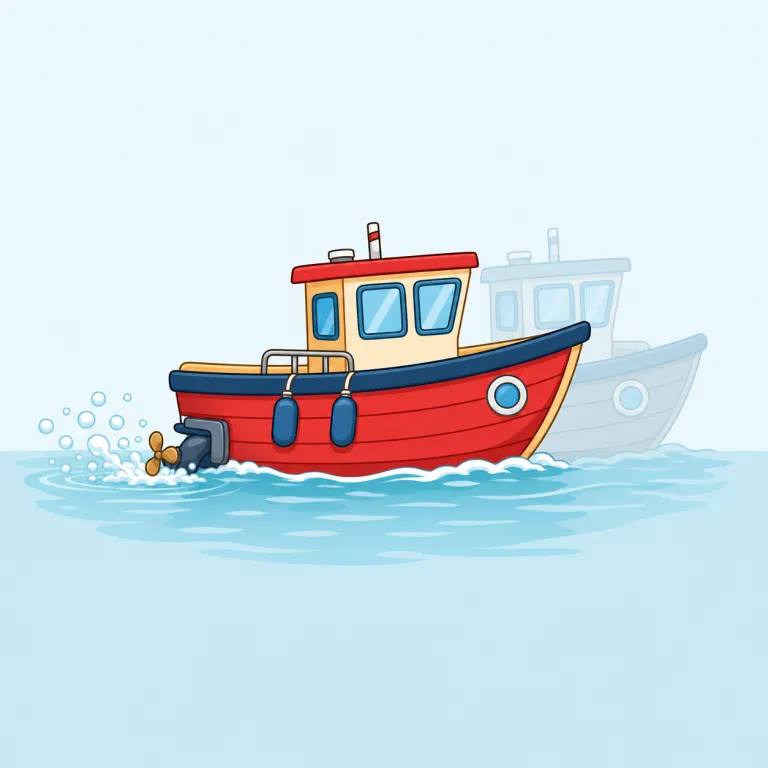
船尾の方へ、後方に;後進して
解説 Definition
船の後ろ側、つまり船尾の方に・後方に、という位置や方向を表す副詞です。海事英語でよく使われ、何かが船の後ろにあることや、船が後進することを表す場合にも用いられます。
Astern means toward the back of a ship or behind it. It is mainly used in sailing and other nautical contexts, including movement in reverse. In everyday English, people usually say "behind" or "backward" instead.
覚え方のコツ Memory Tip
stern を知っていれば astern はまず「船尾側へ」と取れる。海の語でよくある a- + 場所語の形で、aboard, ashore, ahead と同じ並びで覚えると定着しやすい。感覚としては ahead が「前方へ」、astern はその反対で「後方へ」。使われる場面はかなり海事寄りで、move astern, drift astern, lie astern of ..., go astern なら「後ろにある・後進する」。日常の back よりも、船の位置関係や操船指示で出る語だと意識すると混同しにくい。
Notice the core `stern`, which is the back part of a ship. `Astern` belongs to the same sea-language group as `aboard`, `ashore`, and `ahead`. A simple memory hook is: `ahead` means forward, and `astern` is the opposite direction on a ship.
例文
The sailor looked astern and saw another boat following them.
その船員は船尾の方を見て、別の船がついて来るのに気づいた。
The cargo was stored astern, near the back of the ship.
積み荷は船の後方、つまり船尾寄りに保管されていた。
The vessel moved astern to leave the dock safely.
その船は安全に岸を離れるために後進した。
astern の類義語・関連語
astern の語源・成り立ち Etymology
astern は a-「…の方向へ」と stern「船尾」から成る航海語で、sternpost や sternward の stern と同根です。aboard や ashore と同じ a- の感覚があり、「船尾のほうへ」がそのまま「船尾に」を表すようになりました。
Astern is a nautical word built from a- and stern. The prefix a- in older English often meant movement toward or position in, as in aboard or ashore, and stern means the rear of a ship. So the original sense was "toward the stern" or "at the stern," which naturally developed into its modern sea-use meaning. Related words include sternward and sternpost.
同じレベルの語彙をもっと
外部辞書で調べる
この英単語をクイズで覚えよう