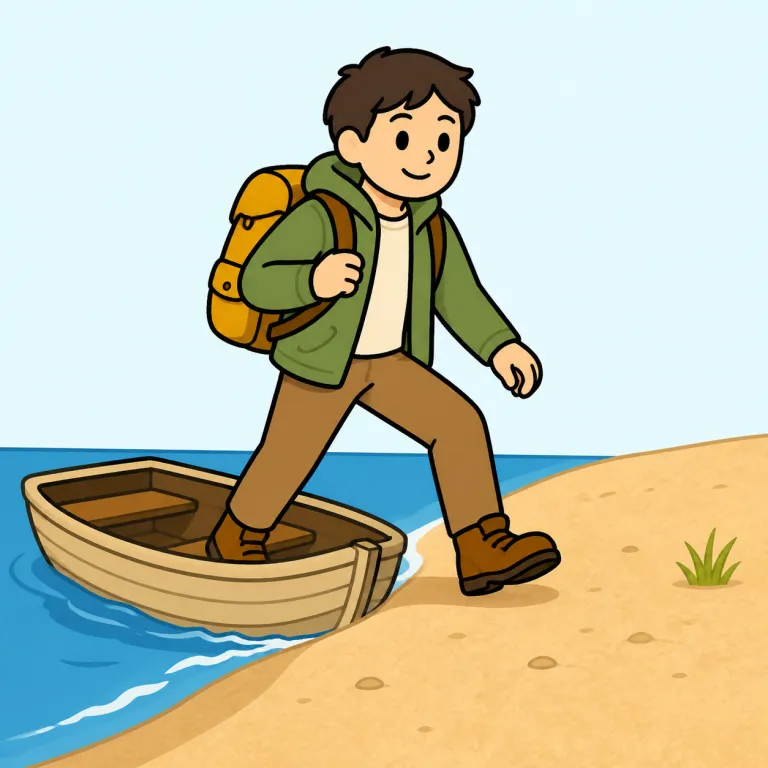
ashore
ashore は英検1級・TOEIC 860・TOEFL 80・IELTS 6.5レベルの英単語で、「岸へ、陸へ、陸上で」という意味があります。発音記号は /əˈʃɔːr/ です。
意味一覧 (2件)
岸へ、陸へ
解説 Definition
海や川にいる人や物が、岸や陸の方向へ移動してたどり着くことを表す副詞です。swim ashore や drift ashore のように、沖や水上から岸へ向かう場面でよく使われます。場所としての陸上ではなく、そこへ着く動きや方向が中心です。
From the water onto the shore or land. This describes the direction and destination of someone swimming, something drifting, or people being brought to land.
覚え方のコツ Memory Tip
shore「岸・海岸」を知っていれば、ashore は「岸のほうへ/岸にいる」とつながります。海や船を基準にして、そこから陸側へ移る感じが核です。特に go ashore で「上陸する」とセットで覚えると強いです。offshore が「沖合で・海外で」、onshore が「陸上で」と対比すると位置関係も整理しやすくなります。人が ashore、船や仕事の場所は offshore/onshore になりやすい、という使い分けも意識すると混同しにくいです。
Spot shore inside the word and picture moving from a boat onto land. Remember go ashore as a useful phrase for making that movement.
例文
After the storm, several boats drifted ashore.
嵐のあと、数隻のボートが岸へ流れ着いた。
He swam ashore with the rope.
彼はロープを持って岸まで泳いだ。
The rescue team brought the survivors ashore.
救助隊は生存者たちを陸へ運んだ。
陸上で
(意味 2)
解説 Definition
海上や船上との対比で、人や物が陸上にいる、または陸上に置かれている状態を表す副詞です。この行では岸へ向かう動きではなく、すでに陸にあるという位置に焦点を当てます。
Ashore means on land, especially in contrast with being at sea or aboard a ship. In this sense it describes a person's or thing's location, not movement toward the shore.
覚え方のコツ Memory Tip
shore「岸・陸地」に a- が付いた副詞で、船上の aboard と対比すると捉えやすい語です。この語義では go ashore「上陸する」という動きではなく、be ashore や wait ashore のように、すでに「陸上に・陸上で」いる状態を表します。
Connect ashore with shore and picture someone already off the ship and on land. In this row, it answers where—on land—rather than indicating movement toward land.
例文
Most of the crew were already ashore when the alarm sounded.
警報が鳴ったとき、乗組員の大半はすでに陸上にいた。
While the captain stayed aboard, the passengers waited ashore.
船長が船に残る間、乗客たちは陸上で待った。
The supplies were stored ashore in a secure warehouse.
物資は陸上の安全な倉庫に保管されていた。
えいたんごクイズでの正答率
この語をはじめて出題された 32人 のうち 7人 が正解しました(22%)。
えいたんごクイズの回答から集計した独自データです。1人につき最初に出題されたときの1回だけを数えており、復習や2回目以降の回答、「わからない」と時間切れは含みません。 集計時点は 2026年9月19日 です。
ashore の類義語・関連語
類義語
対義語
派生語
ashore の語源・成り立ち Etymology
ashore は a-「〜の上へ・〜の状態で」と shore「岸」から成り、文字どおりは「岸へ、岸の上で」です。a- は古い前置詞 on に通じ、海から陸へ移る感覚が核で、offshore や seashore にも同じ shore が見えます。
The word combines a-, connected with the old preposition on, and shore. In this directional sense, the combination means onto the shore.
同じレベルの語彙をもっと
英検1級の一覧へ →外部辞書で調べる
この英単語をクイズで覚えよう