閉鎖症
解説 Definition
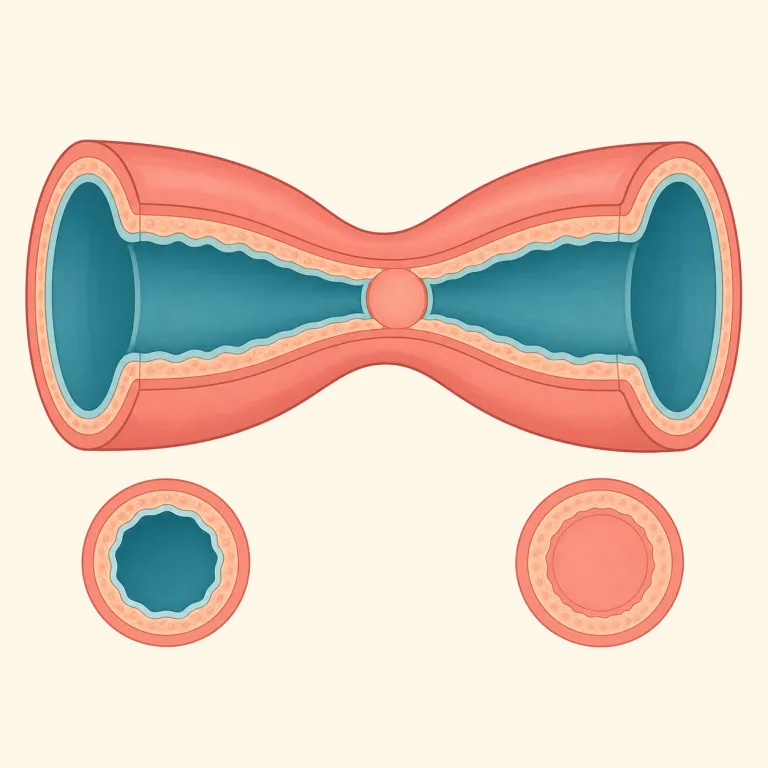
閉鎖症。先天性障害で、身体の自然な開口部がない状態。
Atresia is a medical condition in which a normal opening or passage in the body is closed, missing, or not fully formed. It is usually present from birth and can affect organs such as the intestines, ear, or heart vessels. The word is highly technical and used mainly by doctors.
覚え方のコツ Memory Tip
医学語として覚えるなら、まず stenosis が「狭くなる」で、atresia はその一段先の「そもそも開口部や管ができていない、または完全に閉じている」と対比すると残りやすいです。語尾の -ia は病態名でよく出る形。obstruction のような後天的な“詰まり”より、先天的な“通り道そのものの欠如”を指すことが多いと押さえると混同しません。biliary atresia、esophageal atresia のように臓器名とセットで覚えると定着します。
A useful way to remember this medical word is by contrast. `Stenosis` means a passage becomes narrow, but `atresia` is more extreme: the opening or tube is missing or completely closed. The ending `-ia` is common in names of conditions. It is often learned in set phrases like `biliary atresia` or `esophageal atresia`.
例文
Atresia occurs when a natural opening in the body is absent or closed.
閉鎖症は、体に本来あるはずの開口部が欠けているか閉じている状態を指す。
Esophageal atresia requires surgical intervention.
食道閉鎖症には手術が必要である。
Doctors may diagnose atresia before birth when a natural opening fails to form.
本来あるべき開口部が形成されない閉鎖症は、出生前に診断されることがある。
atresia の類義語・関連語
atresia の語源・成り立ち Etymology
ギリシャ語 a-(無い)+ tresis(穴・貫通)に由来し、「穴が無い状態」が原義。体の管や開口部が先天的に閉じている病態を指す医学用語。同じ語根を持つ trephine(穿頭器)や接頭辞 a- を共有する atypical(非定型)と関連する。
Atresia comes from Greek a- "not, without" and tresis, meaning "a hole" or "perforation." Its original sense was "absence of an opening." In medical use, it came to mean a condition in which a normal body passage or opening is closed or never formed properly.
同じレベルの語彙をもっと
外部辞書で調べる
この英単語をクイズで覚えよう