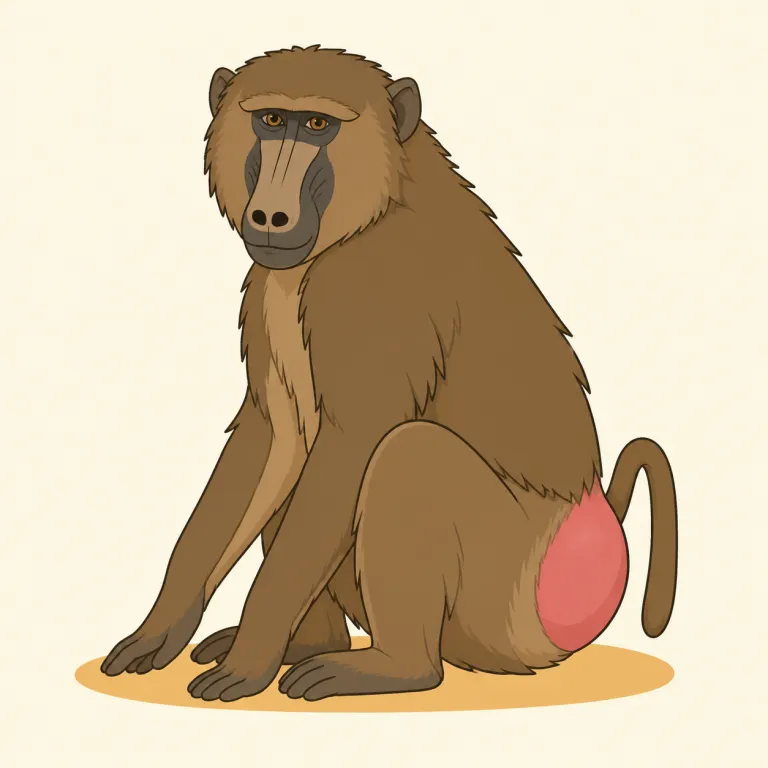
ヒヒ
解説 Definition
ヒヒは大型の霊長類で、アフリカやアラビア半島に生息する動物です。長い顔と強力な顎を持ち、地上で生活することが多いです。
A baboon is a large African monkey with a long face, strong body, and usually a short tail. The word is used in zoology and in general descriptions of wild animals. In informal English, it can also be a rude word for a person who behaves in a rough or foolish way.
覚え方のコツ Memory Tip
monkey を広く「サル」と覚えているなら、その中で baboon は「大型で、木の上より地上生活が多く、犬のように長い顔をしたサル」と位置づけると残りやすいです。ape は尾のない類人猿、monkey はより広い呼び方で、baboon はそこからさらに種類を絞った語。troop of baboons(ヒヒの群れ)のように、荒野を歩く集団の映像と結びつけると定着します。チンパンジーや gorilla とは別枠だと意識すると混同しにくいです。
Place baboon inside the bigger group monkey, but make it more specific: a large monkey that often lives on the ground and has a long, dog-like face. The picture of a troop of baboons walking across open land is a strong memory hook. Keep it separate from apes like gorillas and chimpanzees.
例文
The baboon troop moved across the savanna in search of food.
ヒヒの群れは食べ物を探してサバンナを移動していた。
A baboon can be quite aggressive when protecting its young.
ヒヒは子どもを守るとき、かなり攻撃的になることがあります。
Scientists study baboon behavior to understand primate intelligence.
科学者は霊長類の知性を理解するために、ヒヒの行動を研究しています。
baboon の類義語・関連語
類義語
baboon の語源・成り立ち Etymology
baboon は中世フランス語 babuin を経て英語に入った語で、語源には「唇・しかめ面」を表す語との関連が考えられます。接頭辞などの分解はしにくいですが、突き出た口元や顔つきの印象が名前になったと思うと納得しやすい語です。
Baboon entered English from Middle French babuin. Its deeper origin is uncertain, but it is often linked to words for the lips or a grimacing face. The name likely began from the animal's noticeable mouth or facial expression rather than from a clear root meaning.
同じレベルの語彙をもっと
外部辞書で調べる
この英単語をクイズで覚えよう