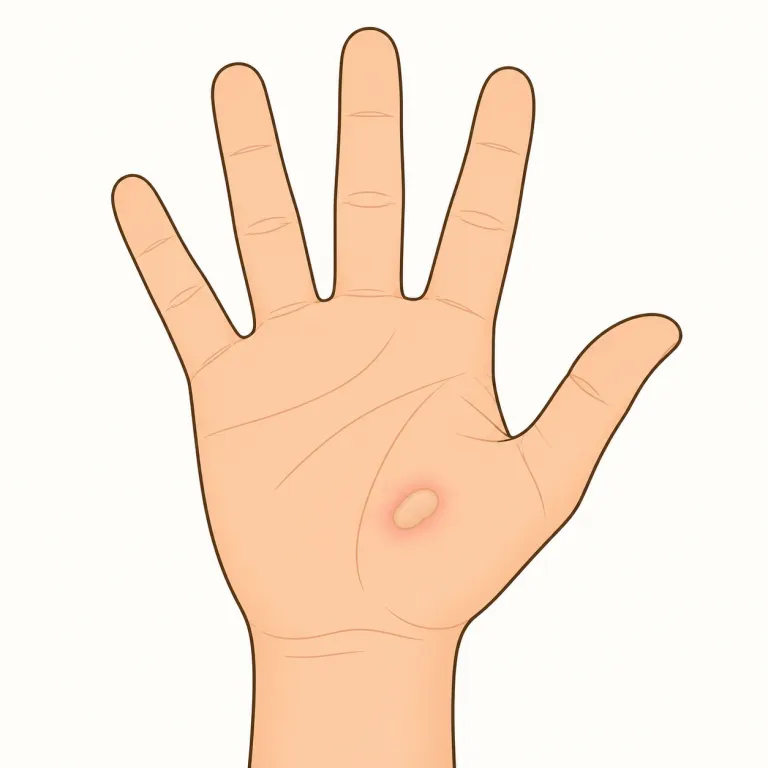
水疱
解説 Definition
皮膚にできる水ぶくれや腫れ物。炎症性の皮膚病変。
A blain is a blister or sore on the skin. It is a rare and old-fashioned word, so modern English usually uses words like "blister" instead.
覚え方のコツ Memory Tip
blain は単独だと見慣れませんが、まずはより基本的な blister(水ぶくれ)を軸に覚えると定着しやすいです。意味の中心は「皮膚がふくらんでできる病変」で、blister よりやや古風・専門的な語だと整理すると混同しにくくなります。関連語の chilblain(しもやけ)にも blain が入っており、「皮膚の腫れ物・水疱を表すかたまり」として覚えるのが有効です。日常会話では blister、医学寄り・文語寄りでは blain が出やすい、と場面で結びつけると残ります。
Use the more common word `blister` as your anchor. `Blain` is a rarer, older, or more literary word for a swollen skin sore, so keep it in the same mental group. It also appears inside `chilblain`, which helps you remember that `blain` is about skin swelling.
例文
The blain on his hand was painful and swollen from the burn.
彼の手にできた水疱はやけどでひどく痛み、腫れていた。
Medieval texts describe blains as one of the symptoms of plague.
中世の文献では、腫れ物がペストの症状の一つとして記されている。
The pharmacist recommended a soothing ointment for the blain on her finger.
薬剤師は、彼女の指にできた水疱に症状を和らげる軟膏を勧めた。
blain の類義語・関連語
blain の語源・成り立ち Etymology
blain は古英語 blægen「はれもの・水疱」に由来し、さらにゲルマン系の「ふくれる・腫れる」感覚の語群へさかのぼります。皮膚がぷくっと膨らむ様子が語の中心なので、水疱という意味に納得しやすい語です。関連語は chilblain, blainy です。
Blain comes from Old English blaegen, meaning a sore or blister. It belongs to an old Germanic word group connected with swelling or puffing up. Because the central image is skin rising into a bump, the word naturally came to mean a blister-like sore. Related words include chilblain and blainy.
同じレベルの英単語をもっと
外部辞書で調べる
この単語を英単語クイズで覚えよう