蒼白化、白くなること
noun 名詞皮膚などから一時的に赤みが失われ、白っぽく見える現象を指す。医療では、皮膚を押したときの色の変化を、血流や発疹の状態を調べる手掛かりとして観察する。恐怖や衝撃で顔色が青ざめる変化にも使われる。
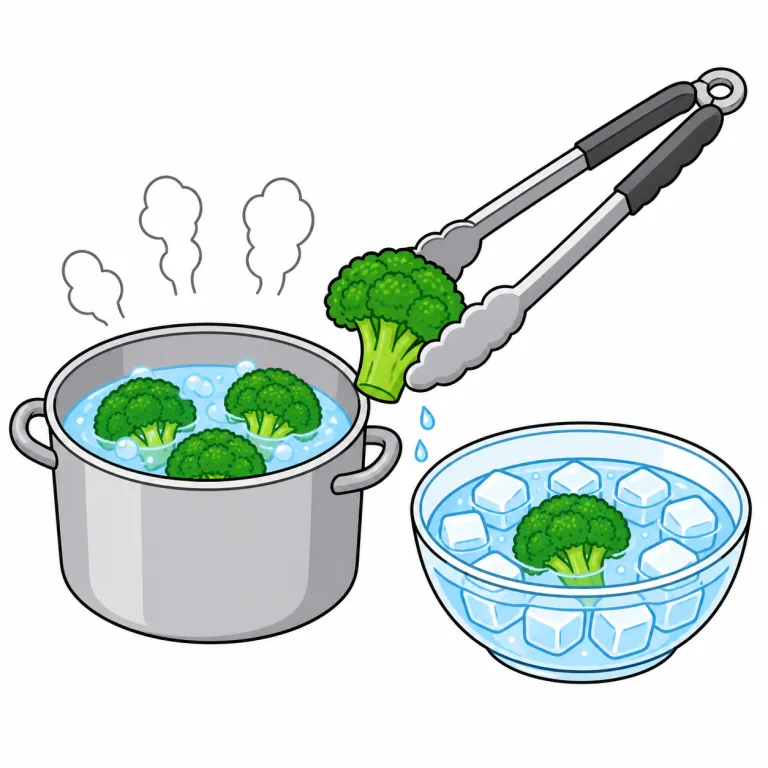
野菜や食材を短時間だけ熱湯にくぐらせ、その後すぐ冷ます下ごしらえや加熱処理を指す名詞。色や食感、風味を保ちやすくし、冷凍前の処理、皮むきの補助、余分なえぐみを取る目的などで料理に用いられる。
Blanching is a cooking method in which food is put into boiling water for a very short time and then often cooled quickly. It is commonly used for vegetables to soften them slightly, keep their color, or prepare them for freezing or peeling.
料理の blanching は、完全にゆでる boil ではなく「さっと熱湯に通して、すぐ冷水へ」のセットで覚えると定着しやすいです。レシピでは blanch the broccoli の形でよく出て、色止め・皮むき・えぐみ取り・冷凍前の準備に使われます。似た下処理の parboil は「半分ゆでる」で火を通す目的がやや強めですが、blanching は見た目や風味を整える短時間処理。単なる boil と区別して覚えるのがコツです。
Remember it as not full `boiling`, but a quick kitchen step: into hot water, then out again. Recipes often say `blanch the broccoli`, so connect the word with short heat, not long cooking. It helps to contrast it with `boil`, which is much more complete.
Blanching broccoli before freezing helps preserve its bright green color.
冷凍前にブロッコリーを湯通しすると、鮮やかな緑色を保ちやすい。
The chef used blanching as a technique to soften the vegetables without overcooking them.
シェフは野菜を火に通しすぎずに柔らかくするため、湯通しという技法を使った。
Blanching is commonly used in professional kitchens for food preparation and preservation.
湯通しは、仕込みや保存のために業務用の厨房で広く用いられている。
文脈によって、次の意味でも使われます。
皮膚などから一時的に赤みが失われ、白っぽく見える現象を指す。医療では、皮膚を押したときの色の変化を、血流や発疹の状態を調べる手掛かりとして観察する。恐怖や衝撃で顔色が青ざめる変化にも使われる。
栽培中の野菜を土寄せしたり覆ったりして光を遮り、葉や茎を白く柔らかく育てる処理を指す。セロリ、ネギ、アスパラガスなどで、苦味を抑えて食感を穏やかにする目的で行われる。
blanching は blanch+-ing。blanch は古フランス語 blanchir「白くする」に由来し、核の blanc は「白い」で、熱湯でさっと白っぽく仕上げる調理法につながります。blank や blanche も同じ語根で、「白くして色を抜く」感覚が見えます。
Blanching comes from the verb blanch plus the suffix -ing. Blanch came into English from Old French blanchir, meaning "to make white," built on blanc, "white." The cooking sense grew from the idea of briefly scalding food until it turns pale; related words include blank and blanche.
この英単語をクイズで覚えよう