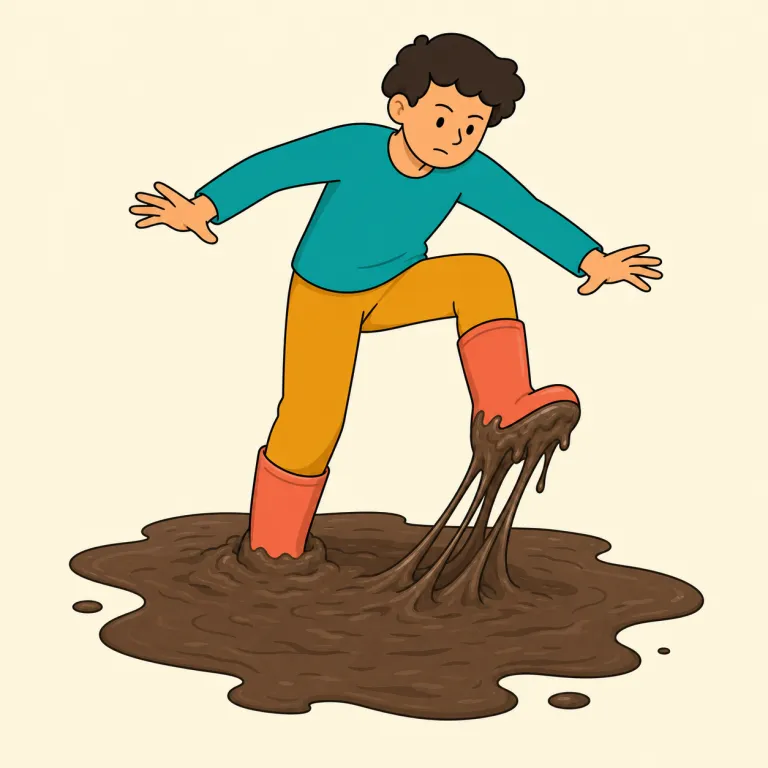
泥沼化する
解説 Definition
沼地や泥地にはまり込むこと。また比喩的に、進行や進捗が困難になる状況を表します。
Bogging means becoming stuck or slowed down, especially in soft wet ground like mud. It is also used in a more general way for work, plans, or discussions that are moving too slowly because of problems or too much detail.
覚え方のコツ Memory Tip
まず `bog` を「swamp / marsh の仲間、足を取られるぬかるみ」として映像で覚えると定着しやすいです。そこに `-ing` が付いた `bogging` は「いま泥にはまって進めない感じ」。特に `bog down` で非常によく出て、「計画・議論・作業が途中で重くなって進まない」という比喩に広がります。`stopping` が完全停止なら、`bogging` は止まり切る前の“重くて前進できない”感覚。`boggy`(じめじめした、ぬかるんだ)も一緒に押さえると、物理的な泥沼と比喩的な泥沼化がつながって覚えやすくなります。
Learn it through the phrase `bog down`. A `bog` is wet, heavy ground, so if work gets bogged down, it feels like your feet are stuck and progress becomes slow. It is not a full stop, but a heavy, frustrating slowdown.
例文
The project started bogging down due to unexpected technical challenges.
プロジェクトは予期しない技術的な課題のために行き詰まり始めた。
The truck got bogged down in the mud after the heavy rain.
大雨の後、トラックは泥にはまり込みました。
Bogging down in details can prevent you from seeing the bigger picture.
細部にはまり込むと、大局的な見方ができなくなる可能性があります。
bogging の類義語・関連語
派生語
紛らわしい語
bogging の語源・成り立ち Etymology
bog は語源がやや不確かですが、ケルト系語の「湿地・ぬかるみ」にさかのぼると考えられます。-ing は進行・動作名詞の語尾で、『沼にはまって進めない』感覚から「泥沼化する」となり、関連語に boggy, bog down があります。
Bogging comes from bog with the verb ending -ing. Bog is of uncertain origin, but it is usually linked to Celtic words for a marsh or soft wet ground. From the idea of getting stuck in a bog, English developed meanings like becoming trapped, slowed, or dragged into difficulty; compare boggy and bog down.
同じレベルの語彙をもっと
外部辞書で調べる
この英単語をクイズで覚えよう