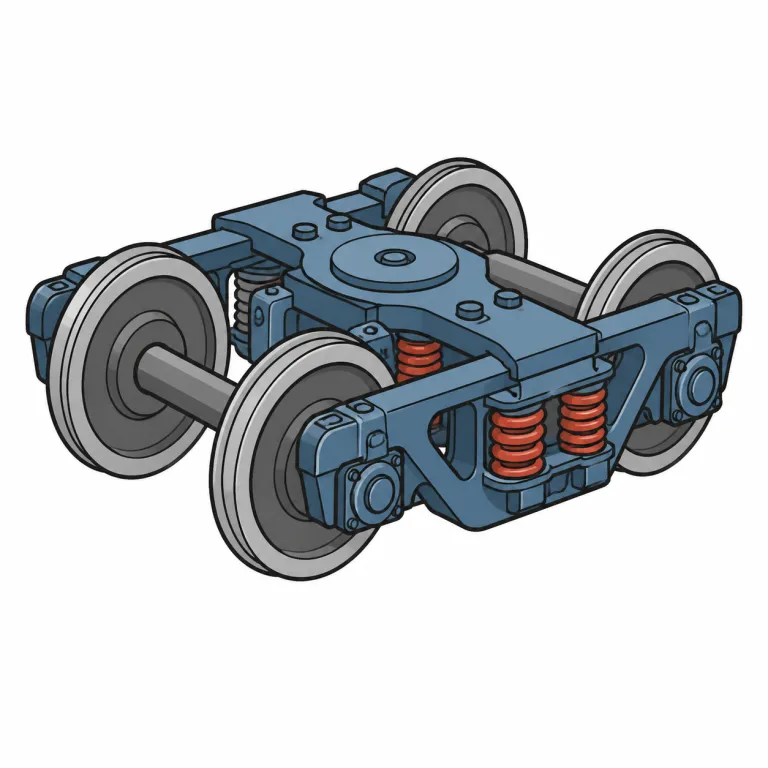
台車
解説 Definition
鉄道車両の車輪を支える台車部分。また、ゴルフのボギーの別綴りでもある。
A bogie is the wheel frame under a railway car or train that helps support it and lets it move smoothly along the track. It is mainly used in railway and engineering contexts. In other varieties of English, this word can have different meanings, so the context matters.
覚え方のコツ Memory Tip
bogie は単独で丸暗記するより、railway の決まった場面で覚えると残りやすい語です。car や carriage が「車体」、wheel が「車輪」なのに対し、bogie はその下で複数の車輪をひとまとめに支える「足回りの台車」。『車体の下のユニット』という位置イメージで固定すると混同しにくいです。motor bogie などの連語でも出ます。なおゴルフでは bogey の別綴りなので、文脈判断が必要です。
Remember `bogie` as a railway word for the wheel unit under a train car. The car body is above, the wheels are below, and the `bogie` is the supporting frame that holds several wheels together. Fix that location in your mind: it is the undercarriage part, not the whole carriage.
例文
The train's bogie was inspected for wear and tear during routine maintenance.
列車の台車は定期点検中に摩耗がないか検査された。
A damaged bogie can cause the entire railcar to derail at high speeds.
損傷した台車は高速走行時に車両全体の脱線を引き起こす可能性がある。
Engineers redesigned the bogie to improve stability and reduce vibration on curved tracks.
技術者たちはカーブでの安定性を向上させ振動を軽減するために台車を再設計した。
bogie の類義語・関連語
bogie の語源・成り立ち Etymology
bogie はイングランド北部方言の bogie にさかのぼりますが、さらに奥の起源は不明です。もとは低い手押し車や小型台車を指し、そのイメージが鉄道の「車体を下で支える台車」へ広がりました。motor bogie や Jacobs bogie に残るように、まず「小さな車輪付き台」が核心です。
Bogie comes from a northern English dialect word, though its deeper origin is uncertain. It first referred to a small wheeled trolley or cart. From that image, it later came to mean the wheeled underframe that supports a railway car.
同じレベルの語彙をもっと
外部辞書で調べる
この英単語をクイズで覚えよう