急にエネルギー切れになる
verb 動詞長距離走や自転車競技などで、エネルギー切れにより突然ひどく疲れて動けなくなることを表す。主に自動詞として使われ、通常の疲労よりも急激な失速を含意する。
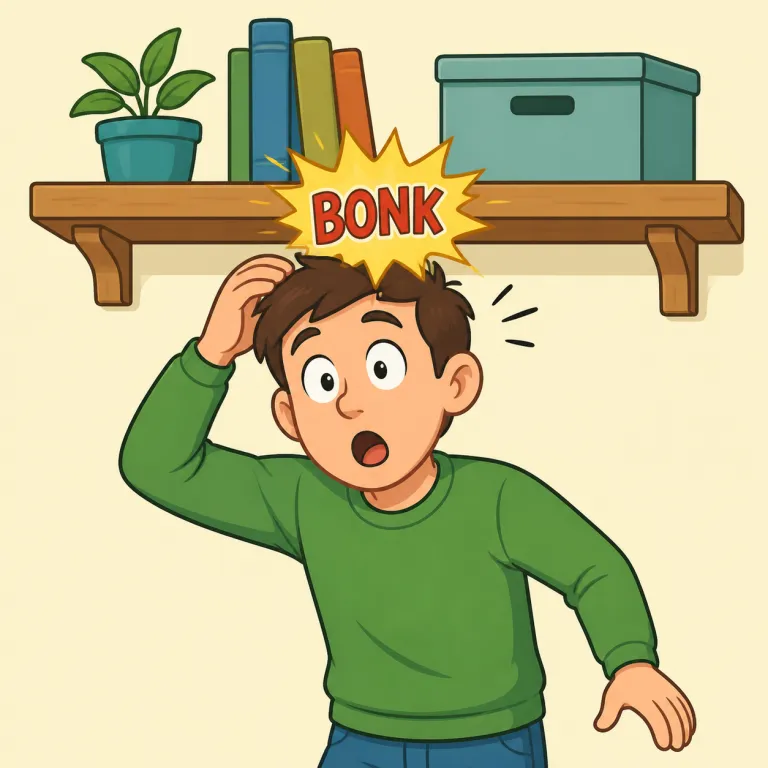
頭などをゴツンとぶつけること。イギリスの俗語では性行為を意味することもある。
To bonk means to hit something with a short, dull impact. It is usually used for a light or accidental knock rather than a serious or violent hit.
bonk は hit や bump よりも「硬い物に頭や体を鈍くゴツンと当てる」感じで覚える。音の響きが bang, bong, bump 系で、軽くはないが大事故でもない一撃を連想すると残りやすい。よく bonk your head / bonk someone on the head の形で出る。英俗語では sex を指すこともあるので、文脈が身体の接触か会話の冗談かを見分けると混同しにくい。
`Bonk` sounds like the kind of dull impact it describes, similar to `bong` or `bump`. It often appears in phrases like `bonk your head`, so that is a good fixed chunk to remember. Think of a solid but not disastrous hit against something hard.
He accidentally bonked his head on the low doorframe while entering the cottage.
彼は小屋に入る際、低いドア枠に頭をゴツンとぶつけてしまった。
The toddler kept bonking his toy against the table, making a loud noise.
幼児はおもちゃをテーブルにゴンゴンとぶつけ続け、大きな音を立てた。
She tried to stand up quickly and bonked her head on the shelf.
彼女は急いで立ち上がろうとして、棚に頭をゴツンとぶつけた。
文脈によって、次の意味でも使われます。
長距離走や自転車競技などで、エネルギー切れにより突然ひどく疲れて動けなくなることを表す。主に自動詞として使われ、通常の疲労よりも急激な失速を含意する。
bonk は20世紀英語の擬音的な動詞で、何かが鈍く当たる bonk という音から生まれた。bang や bong と同じ音象徴の仲間で、語頭 b- と語尾 -nk の硬い響き自体が「ゴツン」を再現している。
Bonk is a 20th-century English sound-based verb. It imitates the dull sound of something hitting something else, similar to words like bang and bong. Its heavy sound shape helped it develop the meaning of striking with a blunt hit.
この英単語をクイズで覚えよう