ブーイング
解説 Definition
booing は boo(ブーと不満の声を上げる)の現在分詞・動名詞です。試合や公演などで、観客が不満や反対を声で示す行為を指します。
Booing is the act of making a loud “boo” sound to express disapproval, contempt, or opposition, especially as part of an audience or crowd. It is also the present-participle form of boo, used for an action that is continuing.
覚え方のコツ Memory Tip
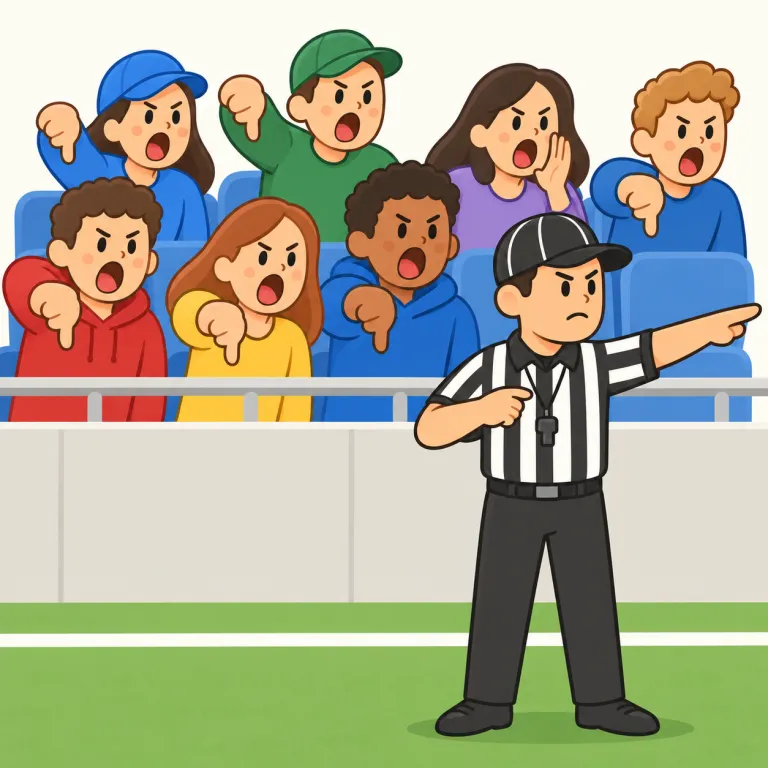
原形 boo「ブーと不満を示す」に -ing を付けた現在分詞・動名詞で、語末の oo は長い /uː/ のままです。観客が悪い判定や不評な演技に一斉に boo と声を上げる場面を思い浮かべ、loud booing、start booing、be booing の組み合わせで覚えましょう。
The memory cue is built into the sound: boo imitates the long /buː/ cry people make to show disapproval. Add -ing to form booing; both o’s remain, so the spelling has three vowels together, boo + ing. Imagine a stadium crowd reacting to a bad decision or an audience rejecting a speech. Useful patterns include loud booing, the booing started, and fans were booing. Unlike cheering, which expresses approval, booing publicly signals that the crowd dislikes or opposes what it sees or hears.
例文
The booing started after the bad call.
悪い判定の後でブーイングが始まりました。
Some fans were booing during the speech.
スピーチの間、一部のファンがブーイングをしていました。
The player stayed calm despite the loud booing.
大きなブーイングにもかかわらず、その選手は落ち着いていました。
booing の類義語・関連語
類義語
紛らわしい語
booing の語源・成り立ち Etymology
擬音語「boo」に由来し、不満や軽蔑を表す叫び声を模したもの。18世紀頃から英語に登場。動詞化して「ブーイングする」の意に。類似の擬音語にhiss(シーッ)やjeer(やじる)がある。音がそのまま意味になった直感的な語。
Booing is formed by adding -ing to boo, with the spelling of boo kept intact. Boo is an imitative word representing a low, prolonged cry used to express contempt or disapproval. The interjection is recorded in English from around the eighteenth century and later developed a verbal use, “to cry boo at.” From that verb, booing arose as both a present participle and a noun for the collective act or sound.
同じレベルの語彙をもっと
外部辞書で調べる
この英単語をクイズで覚えよう