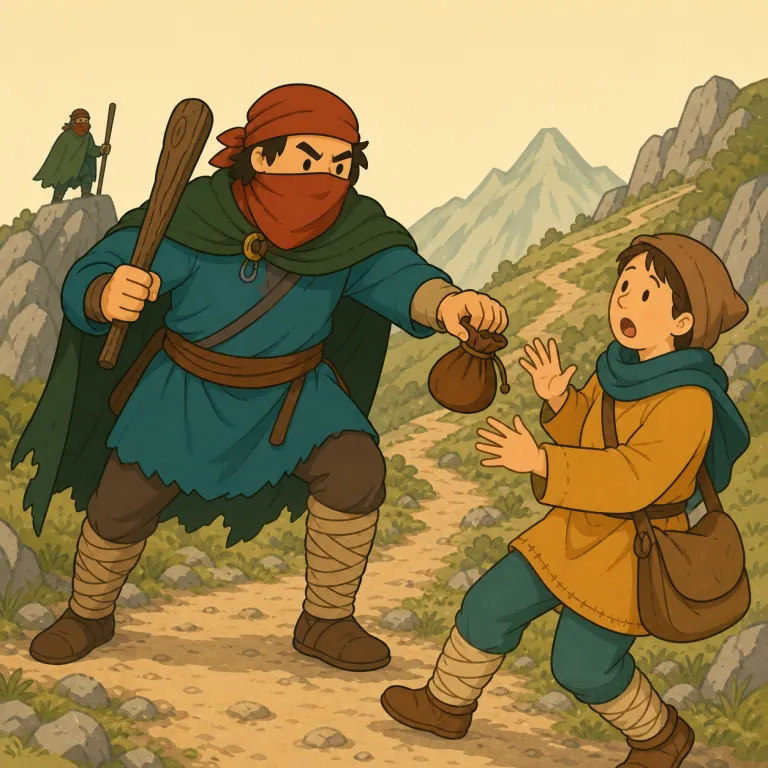
強盗
解説 Definition
略奪や掠奪を行う盗賊。特に辺境地域や田舎で活動する強盗犯で、歴史的には山賊や野盗を指す。
A brigand is a robber or bandit, especially one in older stories or in rough, remote areas. The word has a historical or literary feeling and is less common in everyday modern English.
覚え方のコツ Memory Tip
thief が「こっそり盗む人」、robber が「力ずくで奪う人」だとすると、brigand はさらに場面が限定され、山道・辺境・田舎で武装して略奪する「山賊っぽい強盗」。bandit とかなり近いが、brigand の方が古風で歴史物・物語で出やすい語として覚えると残りやすい。a band of brigands, mountain brigands のように「集団で現れる武装盗賊」の絵をセットで持つと、普通の robber と混同しにくい。
A `brigand` is closer to an old story word than an everyday word like `robber`. Picture armed thieves in a group, often in mountains or remote places: `a band of brigands`. Linking it with that historical, rough setting helps separate it from ordinary `thief` or `robber`.
例文
Medieval brigands attacked travelers on the mountain roads.
中世の盗賊は山道を旅する人々を襲撃した。
The gang of brigands was finally captured by the authorities.
その強盗団はついに当局に逮捕された。
Historical accounts describe brigands plundering villages.
史料には、盗賊が村を略奪していたと記されている。
brigand の類義語・関連語
紛らわしい語
brigand の語源・成り立ち Etymology
中英語 brigaunt を経て、中仏語 brigand、さらに古イタリア語 brigante にさかのぼり、その背後にはケルト系 briga「争い・力」の層があります。語根 brigare は「争う・戦う」で、もとは“戦いや略奪に加わる者”から「強盗」へ。関連語は brigandage, brigade。
Brigand came into English through Middle French brigand and Italian brigante. It is linked to the idea of fighting or strife, from a root seen in words meaning "to fight" or "quarrel." The sense moved from a fighter or irregular soldier to a robber or bandit; related words include brigandage and brigade.
同じレベルの語彙をもっと
外部辞書で調べる
この英単語をクイズで覚えよう