飾り線(スワッシュ)
noun 名詞書体やカリグラフィーで、文字の端から長く伸びる装飾的な飾り線を指す。swash capitalsやswash charactersのように使い、通常の字形より華やかさを加えるが、可読性より装飾性を重視する用法である。
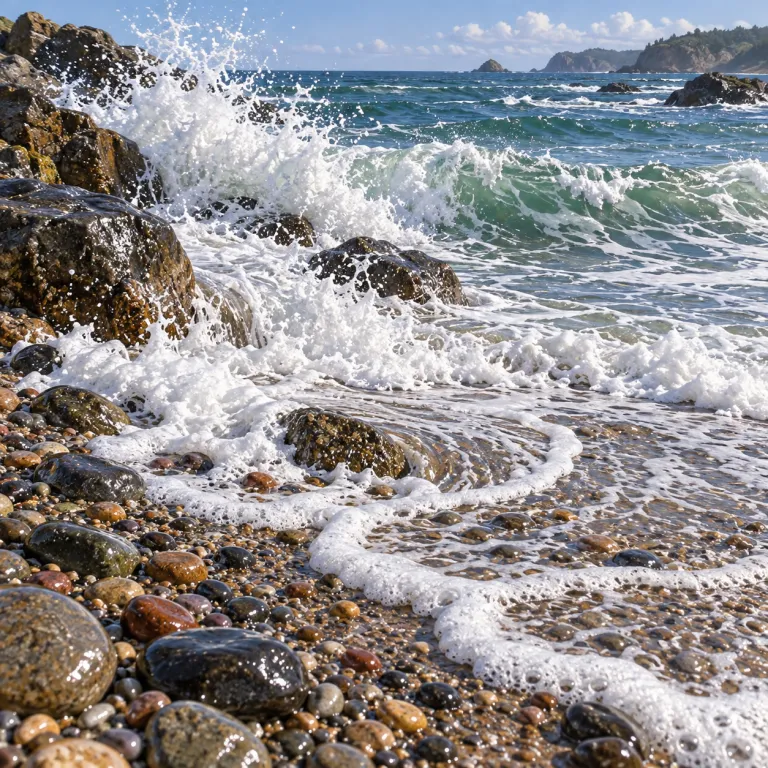
水や波が音を立てて激しく打ち寄せたり、ばしゃばしゃ動いたりすることを表す動詞。古風な文脈では、剣などを見せびらかすように大げさに振り回す、という意味でも使われる。
To swash means to move or strike with a noisy, splashing sound, especially when water washes around. In older or literary use, it can also mean to swing something, such as a sword, in a dramatic or showy way. The word is not very common in everyday modern English.
splash を知っていると覚えやすい語。swash は splash ほど『飛び散る一発』ではなく、波や水がざぶざぶ寄せて動く連続感がある。the waves swashed against the shore, water swashing around your boots のように、水の音と動きをセットで思い出すと定着しやすい。古風な文脈では sword を大げさに振り回す意味もあるが、まずは『荒っぽく水が打つ』を核にし、wash と混同しないこと。
Link swash with splash, but think of repeated rough water movement, not one quick splash. Picture waves swashing against the shore or water swashing around your boots. Do not confuse it with wash: swash has more sound, force, and movement.
Waves swashed against the rocky shore.
波が岩だらけの海岸にざぶざぶと打ち寄せた。
He swashed about with his sword in a theatrical manner.
彼は芝居がかった調子で剣を大げさに振り回した。
Water swashed over the deck during the storm.
嵐のあいだ、水が甲板の上にざぶざぶとかかった。
文脈によって、次の意味でも使われます。
書体やカリグラフィーで、文字の端から長く伸びる装飾的な飾り線を指す。swash capitalsやswash charactersのように使い、通常の字形より華やかさを加えるが、可読性より装飾性を重視する用法である。
swashは、水がばしゃっと当たる音や剣をぶんぶん振る音をまねた擬音語的な語源と考えられる語です。そこから「飛沫の音」にも「騒々しく見せびらかす振る舞い」にも広がり、swashbuckler は「盾を打ち鳴らしていきがる人」の意です。splash が近い仲間です。
Swash is probably an imitative word, made from the sound of water striking or a sword swinging. Because of that noisy sense, it developed both for splashing movement and for loud, showy behavior. The same sound-based feeling appears in words like splash, and in swashbuckler, originally someone who made a loud show with a sword and shield.
この英単語をクイズで覚えよう