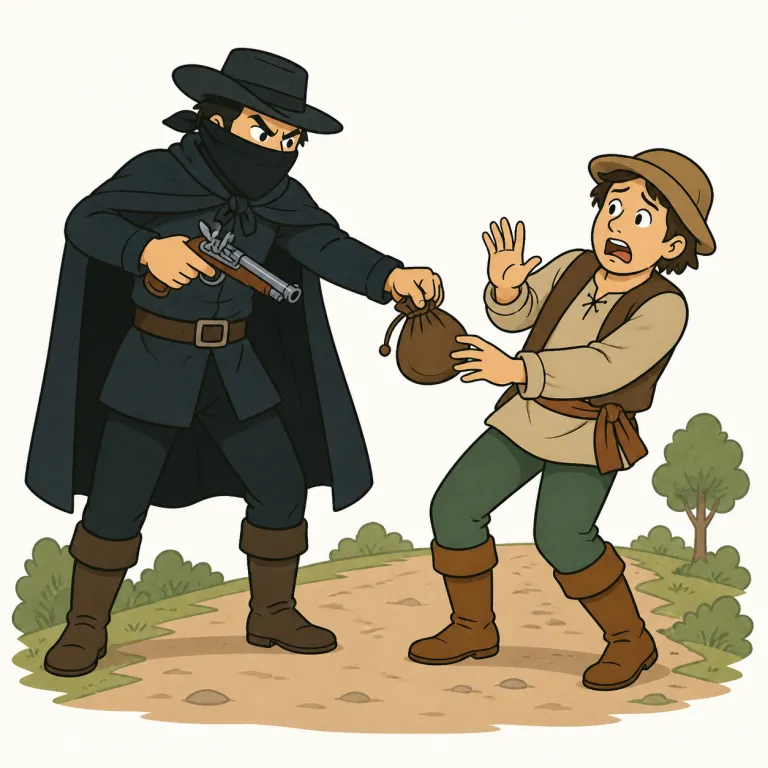
追いはぎ・山賊
解説 Definition
かつて街道沿いで旅人を襲って金品を奪っていた馬に乗った強盗のこと。
A highwayman was a robber who stopped and robbed travelers on roads, especially in the past. The word is mainly used in historical stories and descriptions of earlier times. It is not a common word for modern crime.
覚え方のコツ Memory Tip
highway + man と見て、まず「街道にいる男」と機械的に分解すると覚えやすいです。そこに「昔の旅人や馬車を待ち伏せして襲う男」という場面を重ねると、単なる thief ではなく古風で限定的な語だと定着します。road ではなく highway が入るので、町中の泥棒ではなく主要街道の強盗という感じ。bandit や robber に近いですが、highwayman は歴史小説や西洋の昔話に出る“街道専門・馬に乗った強盗”の像で覚えるとぶれません。複数形が highwaymen になるのもセットで確認すると記憶に残ります。
Break it into `highway + man`. Picture an old road, a horse, and a man waiting to rob travelers there. That helps you remember it is not just any thief, but a historical road robber; the plural `highwaymen` is also worth noticing.
例文
The famous highwayman Dick Turpin terrorized travelers on the roads of 18th-century England.
有名な追いはぎのディック・ターピンは、18世紀のイングランドの街道で旅人たちを恐怖に陥れた。
The novel romanticizes the life of a highwayman who robbed the rich to help the poor.
その小説は、富裕層から奪って貧しい人々を助けた追いはぎの生涯を美化して描いている。
Travelers in the 17th century often feared encountering a highwayman on desolate country roads.
17世紀の旅人たちは、人気のない田舎道で追いはぎに出くわすのを恐れていた。
highwayman の類義語・関連語
highwayman の語源・成り立ち Etymology
highwayman は highway「公道」と man「人」の複合語です。highway は古英語 hēahweg にさかのぼり、high はここで「高い」より「主要な」、way は「道」を表します。つまり「街道に出る男」から追いはぎの意味になり、関連語に byway, roadway があります。
This word is a compound of English highway and man. Highway goes back to Old English hēahweg, where high meant an important or main road, not just a raised one, and way meant a path or road. The idea was first simply a man on the highway, but it came to mean a robber who attacked travelers on main roads.
同じレベルの語彙をもっと
外部辞書で調べる
この英単語をクイズで覚えよう