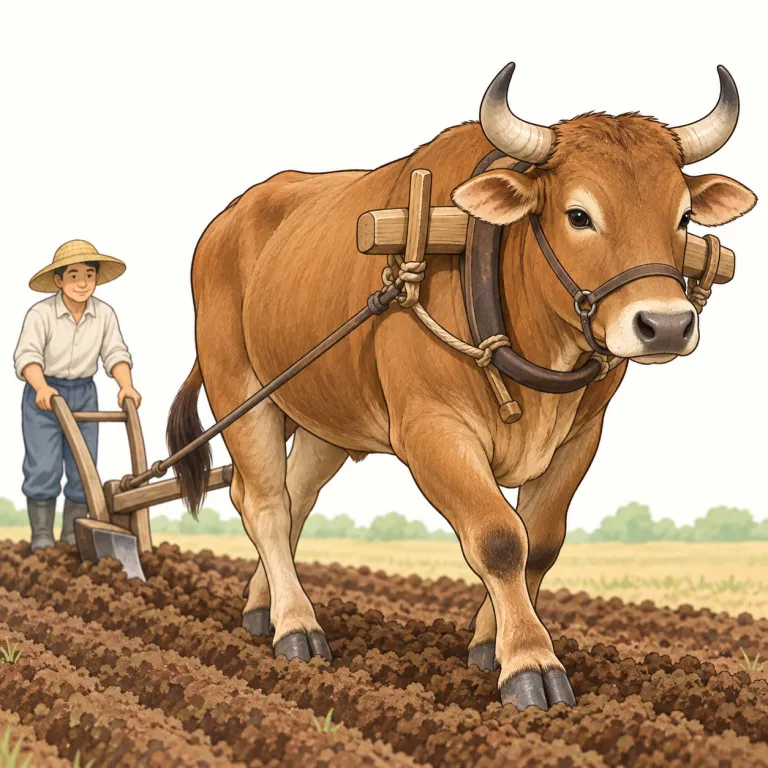
去勢牛
解説 Definition
「bullock」は、去勢された雄の牛、特に若い牛を指す名詞です。地域によっては役牛として使われる牛や、食肉用に育てられる去勢牛を意味します。単に「雄牛」とすると去勢されていない牛も含むため、より限定的な語です。
A bullock is a male cow that has been castrated. It is usually used in farming contexts, especially for animals raised for work or meat. The word is more common in British English and some regional varieties of English.
覚え方のコツ Memory Tip
まず bull「雄牛」を土台に置くと覚えやすいです。bullock はそこに -ock が付いた形で、bull そのものではなく「一段限定された牛」を指す語として捉えると残りやすいです。意味は単なる雄牛ではなく、去勢された若い雄牛寄り。bull は荒々しい繁殖用の雄牛、ox は役牛としての去勢牛の総称、bullock はその中でも若い個体を言うことが多い、と並べると区別しやすいです。農業・家畜・食肉の文脈で出たらこの語を疑うと定着します。
Start from `bull`. `Bullock` is related, but it is not just any bull, so the extra ending helps you remember it is a more specific animal word. Compare it with `bull` and `ox` to keep it clear. If the topic is farming, cattle, or meat, `bullock` is the kind of word that appears.
例文
The farmer used a pair of bullocks to plow the fields in the old days.
昔、その農夫は畑を耕すために一対の去勢牛を使った。
The young bullock was led into the pen alongside the other cattle.
その若い去勢牛は、ほかの牛と一緒に囲いの中へ連れて行かれた。
Bullocks were traditionally an important source of agricultural labor in many cultures.
去勢牛は、伝統的に多くの文化で重要な農業労働力だった。
bullock の類義語・関連語
類義語
bullock の語源・成り立ち Etymology
古英語bulluc「若い雄牛」に由来し、さらにゲルマン祖語*bulluka-へさかのぼります。bullに小ささや派生を表す語尾-ockがついた形と見ると、「雄牛」から「若い牛・去勢牛」へ意味が分かれた流れが見えます。関連語はbull、bullish。
Bullock comes from Old English bulluc, meaning a young bull, and goes back to an older Germanic form. It is connected to bull, with the ending -ock adding a smaller or derived sense. Over time, the word moved from "young bull" toward the later sense of a young or castrated male bovine.
同じレベルの語彙をもっと
外部辞書で調べる
この英単語をクイズで覚えよう