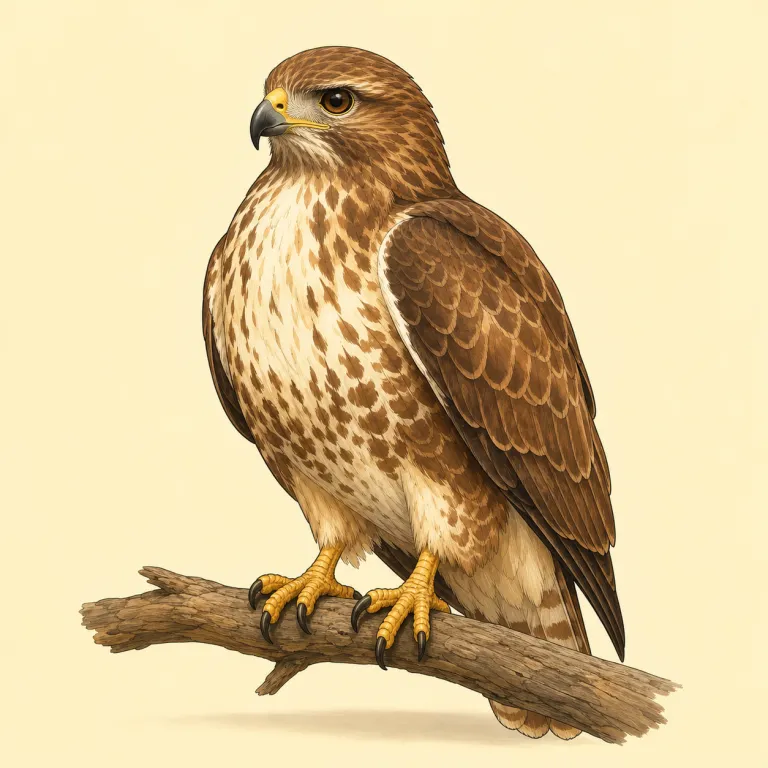
ハゲワシ、コンドル類
noun 名詞北米英語では、主にコンドル科のハゲワシ類、とりわけ turkey vulture を指す。英国英語でタカ科のノスリを指す用法とは鳥の種類が異なるため、地域による意味の違いに注意が必要である。
ノスリはタカ科の中型の猛禽類で、幅広い翼を使って空高く舞いながら地面の小動物を探す。昼間に活動し、草原や農地の上空をゆっくり旋回しながらネズミやウサギを狙う。
A buzzard is a large bird of prey with broad wings that circles high in the sky while looking for food. The word is used especially for certain hawks in Europe and for vultures in some parts of North America. Its exact meaning can change by region.
hawk や eagle より細かい鳥名で、猛禽を大づかみに言うなら hawk、種を意識すると buzzard という位置づけで覚えると残りやすい。buz-zard と2つに切り、語尾 -ard を鳥名っぽい響きとして見る。意味は『幅広い翼で上空をゆっくり旋回し、地上の小動物を探す鳥』という映像で固定すると強い。主軸はノスリだが、米語では vulture を指すこともあるので文脈に注意する。
Place `buzzard` in the bird group with `hawk` and `eagle`, but as a more specific name. Picture a wide-winged bird circling slowly high above the ground. That image helps separate it from `vulture`, which people often confuse with it.
A buzzard swooped low over the meadow to investigate movement below.
ノスリは地面の動きを探るため、草地の上を低く飛んだ。
The buzzard landed on a fence after catching a mouse.
ノスリはネズミを捕まえた後、柵に降り立った。
Local farmers appreciate how buzzards keep rodent numbers down around their barns.
地元の農家は、ノスリが納屋のまわりのネズミの数を抑えてくれることをありがたく思っている。
文脈によって、次の意味でも使われます。
北米英語では、主にコンドル科のハゲワシ類、とりわけ turkey vulture を指す。英国英語でタカ科のノスリを指す用法とは鳥の種類が異なるため、地域による意味の違いに注意が必要である。
くだけた侮蔑表現で、嫌な男や意地悪な年配男性を指す。特に old buzzard の形で使われることが多く、鳥ではなく、相手を不快で付き合いにくい人物として罵る言い方である。
buzzard は中英語を経て古フランス語 busard から入った語で、buse「ノスリ」に、性質や種類を示す接尾辞 -ard が付いた形とされる。もとは“その猛禽そのもの”を指す鳥名で、名前がそのまま固定した語だと分かる。関連では仏語 busard、学名属 Buteo が近い。
Buzzard entered English from Old French busard, based on buse, a kind of hawk, with the suffix -ard. It originally named the bird itself, and that use stayed as the standard form. The word is closely related to French busard, and the bird name Buteo shows a similar background.
この英単語をクイズで覚えよう