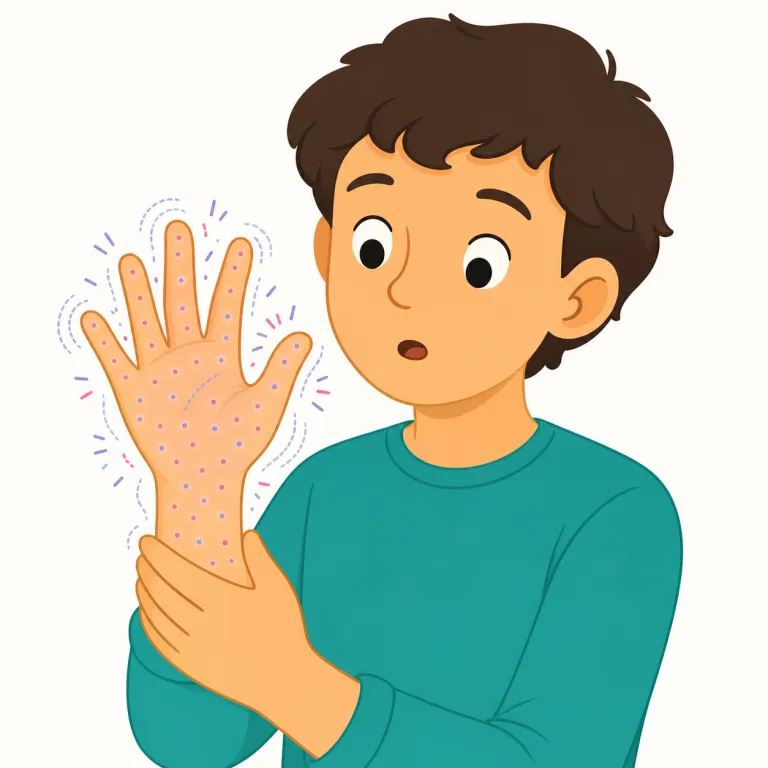
ピリピリする、じんじんする
解説 Definition
皮膚や体の一部が、細かく刺すようにピリピリしたり、軽くしびれるようにじんじんしたりすることを表す動詞です。寒さ、圧迫、興奮、感動などによって起こる感覚について使われ、不快な場合にも心地よい場合にも用いられます。
To tingle means to feel a light stinging, prickling, or buzzing sensation in part of the body. It is often used when skin feels unusual because of cold, excitement, pressure, or strong emotion.
覚え方のコツ Memory Tip
tingle は sting(チクッと刺す)を、もっと弱く細かくした感覚として結びつけると覚えやすいです。fingers tingled, my skin tingled, a tingling sensation の形で身体の一部とよく組み合わさります。numb が『感覚が鈍い・ない』なのに対し、tingle は感覚は残ったまま、細い電気が走るようにじんじんする感じ。寒さ・しびれだけでなく、興奮や感動で spine tingled のように比喩的にも使えるので、『軽い刺激が走る』を芯にすると定着します。
Think of tingle as a small, light sting that stays in your skin. It often appears with body parts: fingers tingled, skin tingled, a tingling sensation. Contrast it with numb: numb means less feeling, but tingle means you still feel a light electric-like sensation.
例文
My fingers began to tingle after I sat in the cold for too long.
寒い場所に長く座っていたあと、指先がじんじんし始めた。
The area started to tingle as the anesthesia wore off.
麻酔が切れるにつれて、その部分がピリピリし始めた。
Her legs began to tingle after she crossed them for a long time.
長いあいだ足を組んでいたので、彼女の脚はしびれるようにピリピリし始めた。
tingle の類義語・関連語
派生語
紛らわしい語
tingle の語源・成り立ち Etymology
中英語 tinglen にさかのぼる語で、語源ははっきりしませんが、軽く触れてちくちくする感じをまねた擬音的なゲルマン系語と考えられます。接辞分解より音感が中心で、同系の ting や tinkle も「小さく鋭い刺激や音」を表し、そこから皮膚がうずく意味が育ちました。
Tingle goes back to Middle English tinglen. Its origin is uncertain, but it is often seen as a sound-based or expressive Germanic word that imitates a light sharp touch or sensation. From that sensory sound idea, it developed into the meaning of feeling slight prickling or stinging in the skin. It is related in form and feeling to words like tinkle.
同じレベルの語彙をもっと
外部辞書で調べる
この英単語をクイズで覚えよう