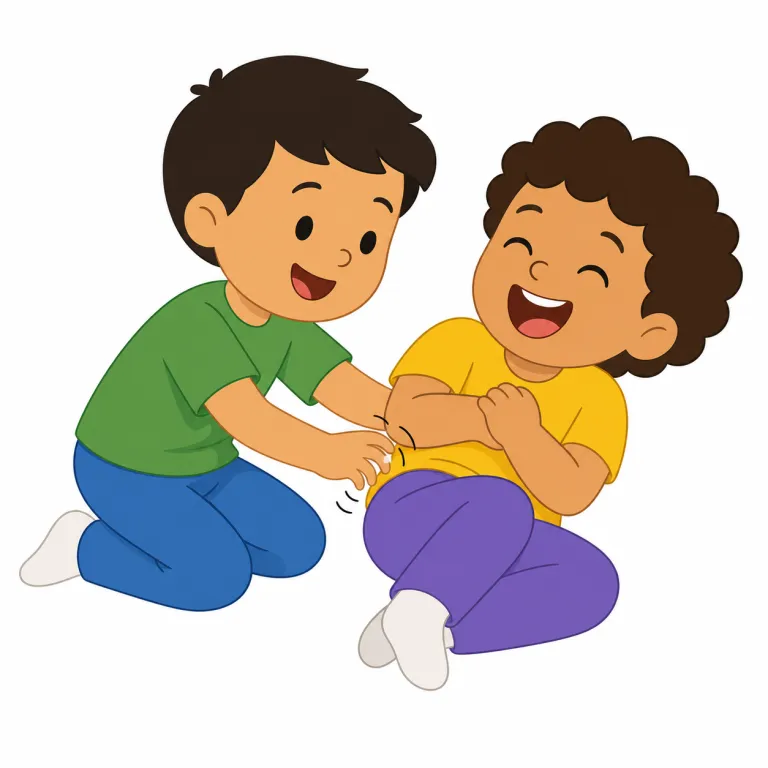
tickle
tickle は英検準1級・TOEIC 860・TOEFL 80・IELTS 6.5レベルの英単語で、「くすぐる」という意味があります。発音記号は /ˈtɪkəl/ です。
くすぐる
解説 Definition
体の一部を軽く触れたり刺激したりして、くすぐったさや笑いを引き起こす行為です。脇の下や足の裏だけでなく、羽毛が鼻をくすぐるような軽い刺激にも使えます。子どもとの遊びのほか、比喩的に興味や好奇心を「くすぐる」と言う場合にも広がります。
To tickle means to touch someone lightly in a way that makes them laugh or move because it feels strange. It can also mean to cause a small, irritating feeling, such as in the throat or nose.
覚え方のコツ Memory Tip
tickle は、強く触るのでなく、指先で何度も軽く刺激して相手が思わず身をよじる場面を核にすると覚えやすい語です。touch がただ「触れる」、poke が「つつく」なのに対し、tickle は laugh や squirm を引き起こす playful な触れ方。ticklish「くすぐったい」とセットで覚えると形でも意味でもつながります。比喩では tickle someone’s curiosity のように「興味をくすぐる」にも広がるので、身体感覚から抽象意味へ伸ばして覚えると忘れにくいです。
Think of `tickle` as a light, repeated touch that makes someone laugh or twist away. That helps you separate it from `touch` or `poke`, which are more neutral. It is useful to learn it with `ticklish`, and also with the expression `tickle someone’s curiosity`.
例文
The child laughed when his father started to tickle him.
父親がくすぐり始めたとき、子どもは笑いました。
The soft feather tickled her nose gently.
柔らかい羽毛が彼女の鼻をそっとくすぐった。
Don't tickle me, I'm very sensitive!
くすぐらないでください。私はすごくくすぐったがりなんです。
えいたんごクイズでの正答率
この語をはじめて出題された 36人 のうち 29人 が正解しました(81%)。
えいたんごクイズの回答から集計した独自データです。1人につき最初に出題されたときの1回だけを数えており、復習や2回目以降の回答、「わからない」と時間切れは含みません。 集計時点は 2026年9月19日 です。
tickle の類義語・関連語
tickle の語源・成り立ち Etymology
「tickle」は古英語系の擬音的な語で、指先がちょこちょこ触れる感覚そのものが語になったと考えられます。接頭辞などの明確な分解より“むずむずする音感”が核で、ticklish や tickler にその感覚が受け継がれています。
"Tickle" is an old English word, probably expressive in origin, shaped by the sound and feeling of light repeated touching. It does not clearly break into smaller meaningful parts. Its original physical sense stayed strong, and related words like "ticklish" keep the same feeling.
同じレベルの語彙をもっと
英検準1級の一覧へ →外部辞書で調べる
この英単語をクイズで覚えよう