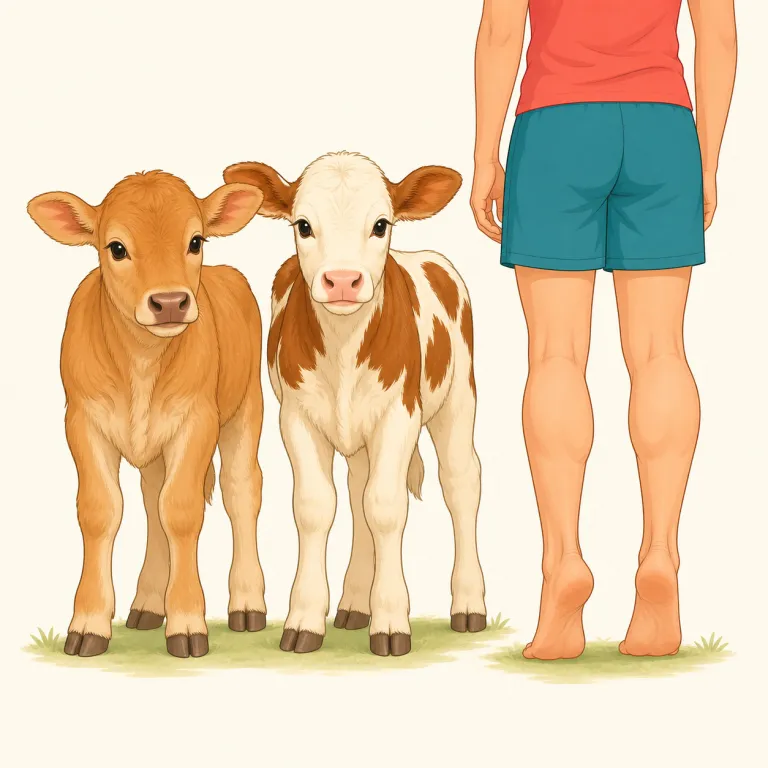
(牛などが)子を産む
verb 動詞calves は動詞 calve の三人称単数現在形でもあり、牛などの大型哺乳類が子を産むことを表します。農業や畜産の文脈で、The cow calves のように使われます。
calves は calf(子牛、ふくらはぎ)の複数形です。単に -s を付けるのではなく、f が v に変わって -ves になります。文脈によって複数の子牛、または両脚などのふくらはぎを表します。
This is the irregular plural of a noun that can mean either a young cow or the muscular back part of the lower leg. The intended meaning depends on whether the context concerns animals or human legs.
calves は calf の複数形で、calf+s ではなく f が v に変わる点をまず固定します。leaf→leaves、wolf→wolves と同じ型として並べると綴りを思い出しやすいでしょう。意味は文脈で決まり、牧場で mother、farmer、feed と共に出れば複数の「子牛」、運動後に legs、hurt、stretch と共に出れば左右の「ふくらはぎ」です。The calves followed their mother なら子牛、My calves hurt after running なら脚。一頭・片脚の calf と、複数の calves を二枚の場面で対にして覚えると混同しにくいです。
Remember the spelling change from calf to calves: the f becomes v before -es, as in leaf–leaves and wolf–wolves. Picture young animals on a farm for one meaning and sore lower legs after running for the other.
The calves followed their mother across the field.
子牛たちは母牛について野原を渡りました。
My calves hurt after the long run.
長く走った後でふくらはぎが痛みました。
The farmer fed the calves every morning.
農家の人は毎朝子牛たちにえさをやりました。
文脈によって、次の意味でも使われます。
calves は動詞 calve の三人称単数現在形でもあり、牛などの大型哺乳類が子を産むことを表します。農業や畜産の文脈で、The cow calves のように使われます。
古英語 cealf(子牛)が語源で、ゲルマン祖語 *kalbaz に遡る。複数形 calves は f→v の音変化による英語古来の変化パターン(cf. wolf→wolves)。関連語: calf(単数形)。また「ふくらはぎ」の意味もあり、これは古ノルド語 kalfi に由来し、子牛のように丸い形から名付けられた。
The animal sense comes from Old English cealf and is traced to Germanic *kalbaz. The lower-leg sense may be connected to Old Norse kalfi, while the plural shows the old f-to-v change also found in wolf–wolves.
この英単語をクイズで覚えよう