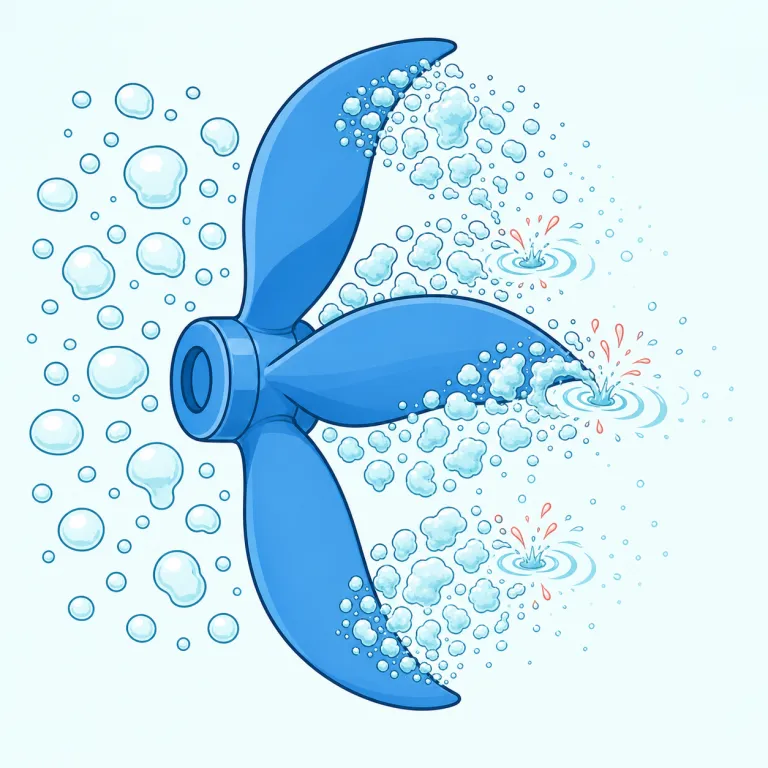
空洞現象
解説 Definition
液体の圧力が急に下がることで内部に気泡が生じ、その後つぶれる際の衝撃で騒音や振動、表面の損傷を引き起こす現象。ポンプや船のプロペラ、超音波洗浄などで見られ、機器の性能低下の原因にもなる。
Cavitation is the formation of small empty spaces or bubbles in a liquid when pressure changes suddenly. The word is used in engineering and physics, especially about pumps, propellers, and fluids, because it can cause noise, damage, or loss of efficiency.
覚え方のコツ Memory Tip
まず cavity「空洞」を知っていると覚えやすい語。cavitation は「液体の中に小さな cavity ができる現象」と捉えると形と意味が結びつく。-ation は「作用・現象」を表すので、cavitate → cavitation の流れも見やすい。boiling や evaporation と違い、熱で沸くのではなく pressure drop で泡が生じ、つぶれる衝撃で damage を出すのが核心。pump cavitation, propeller cavitation のような使い方で覚えると定着しやすい。
Connect it to `cavity`, which means an empty space or hole. `Cavitation` is the process where tiny empty spaces or bubbles form in a liquid, so the shape of the word helps you remember it. It often appears in phrases like `pump cavitation` or `propeller cavitation`.
例文
Cavitation in the ship's propeller caused significant damage to the blades over time.
船のプロペラで起きた空洞現象が、時間とともに羽根に大きな損傷を与えた。
Engineers redesigned the pump to minimize cavitation and extend its operational lifespan.
技術者たちは空洞現象を最小限に抑え、ポンプの寿命を延ばすために設計を見直した。
The ultrasonic cleaning device relies on cavitation to remove dirt particles from delicate surfaces.
その超音波洗浄装置は、空洞現象を利用して繊細な表面の汚れを取り除く。
cavitation の類義語・関連語
紛らわしい語
cavitation の語源・成り立ち Etymology
cavitationはラテン語cavus「空洞の」に由来するcavity/cavitateに、作用を示す-ationが付いた語。cavityやexcavateも同根で、液体中に小さな空洞が生じては消える現象だと分かると語の形と意味がぴたりと合う。
Cavitation comes from cavitate or cavity, both based on Latin cavus, meaning "hollow" or "empty." The ending -ation adds the sense of a process or action. So the word originally referred to the forming of little hollows or voids; related English words include cavity and excavate.
同じレベルの語彙をもっと
外部辞書で調べる
この英単語をクイズで覚えよう